 Back to Altadena Golf Course - Welcome!
Stop 2 of 12
The NE corner of the course
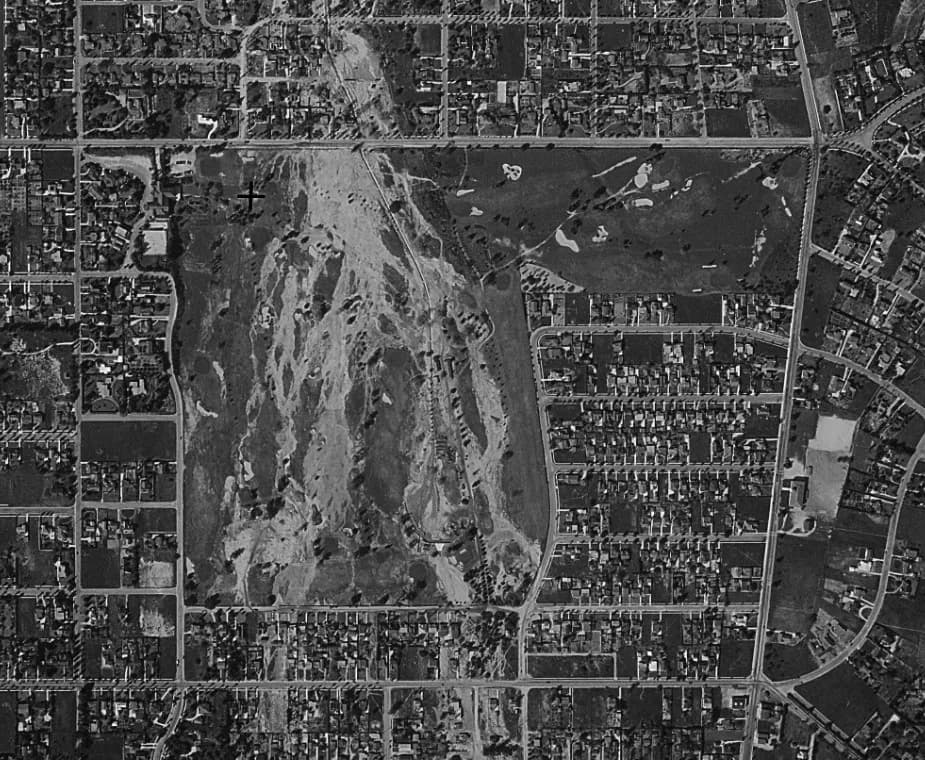
This part of the course was badly damaged in the deluge of 1938 as were the homes across Mendocino to your north as you stand on #1 tee
Written by historians, never AIResearched & written by Marc Striegel
In the app, this story plays on its own as you reach this spot. This page is the preview.
See the full tourListen
Narration
In the app, the full narration plays when you're on location.
The story
The NE corner of the course
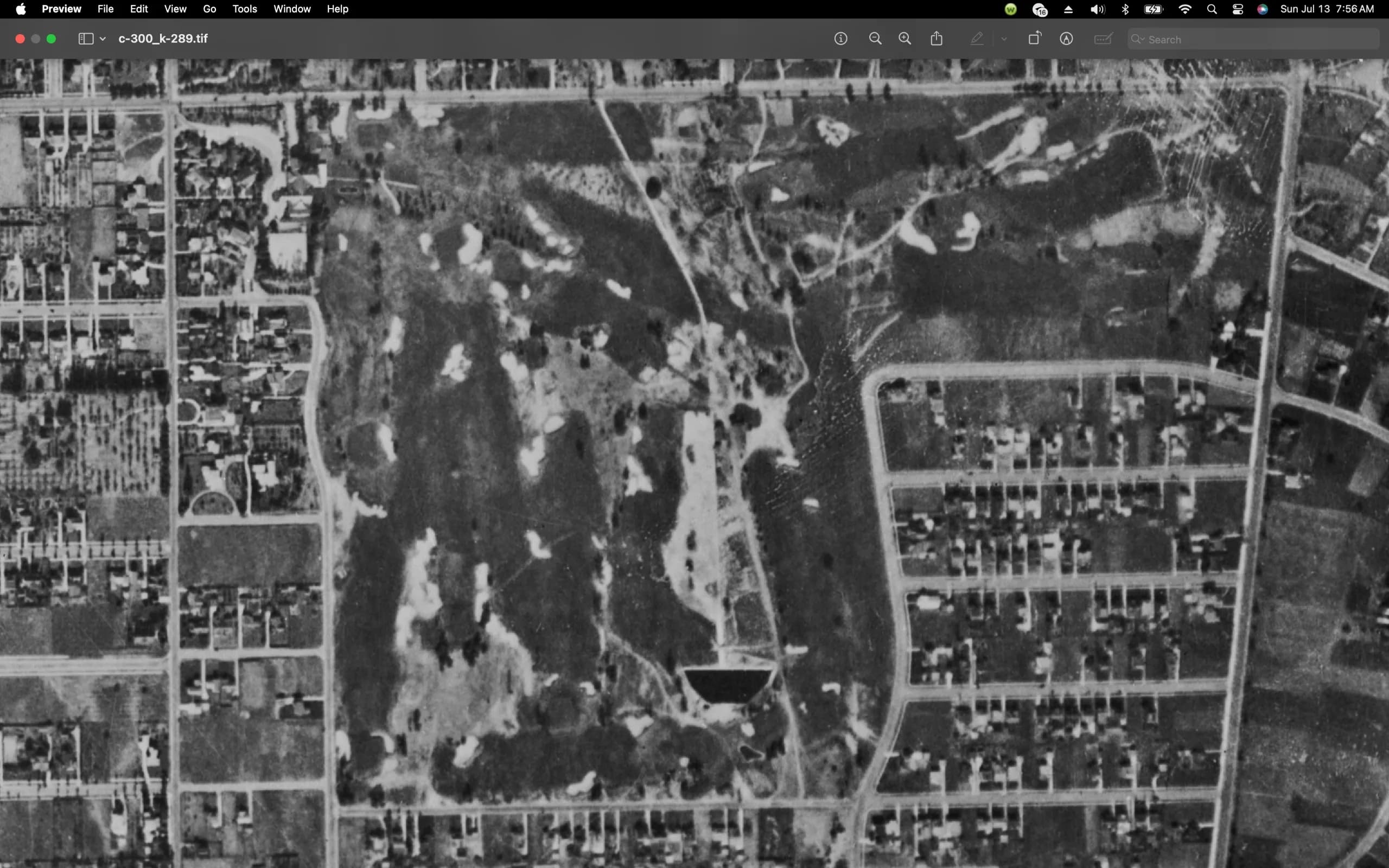
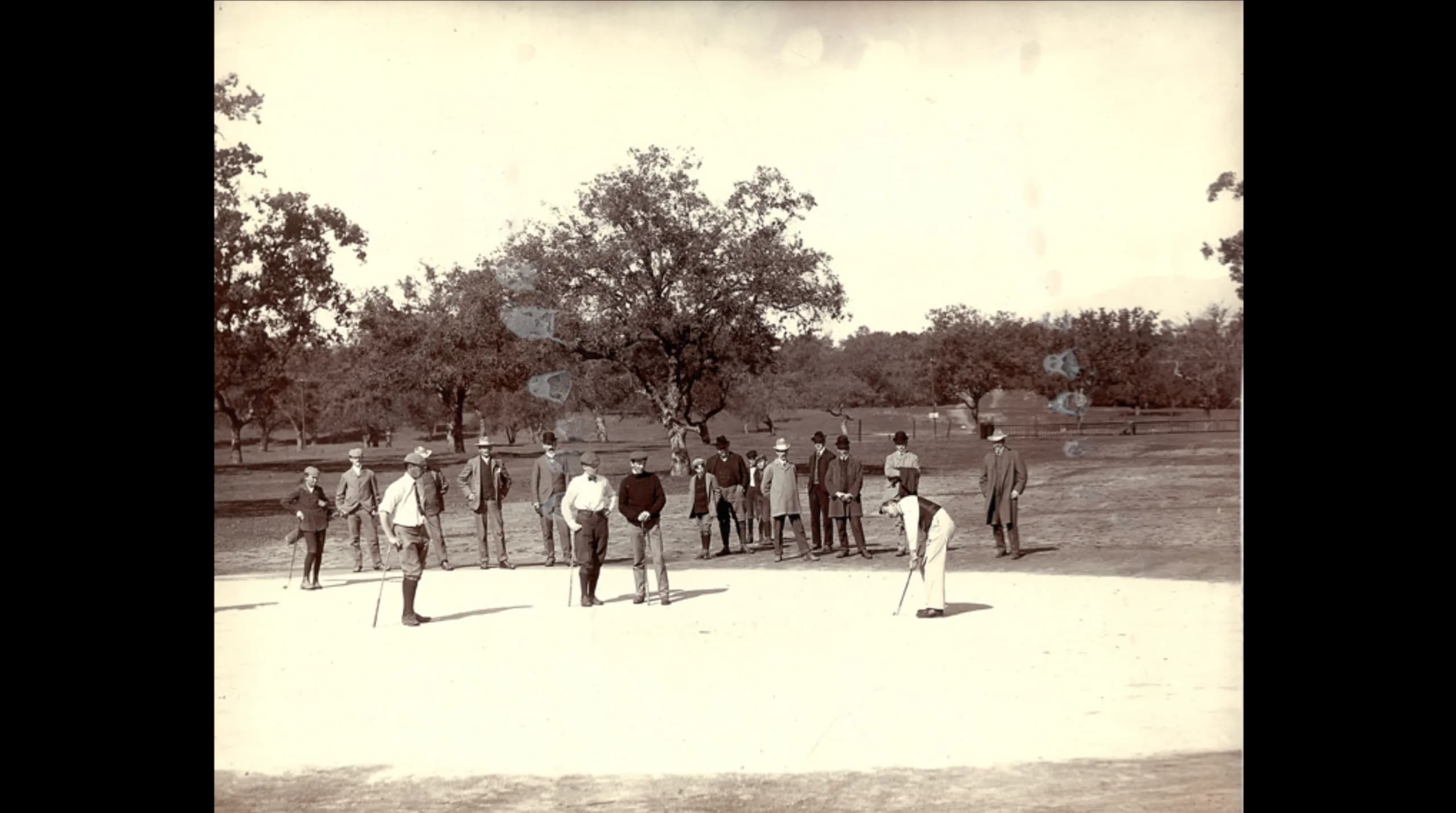
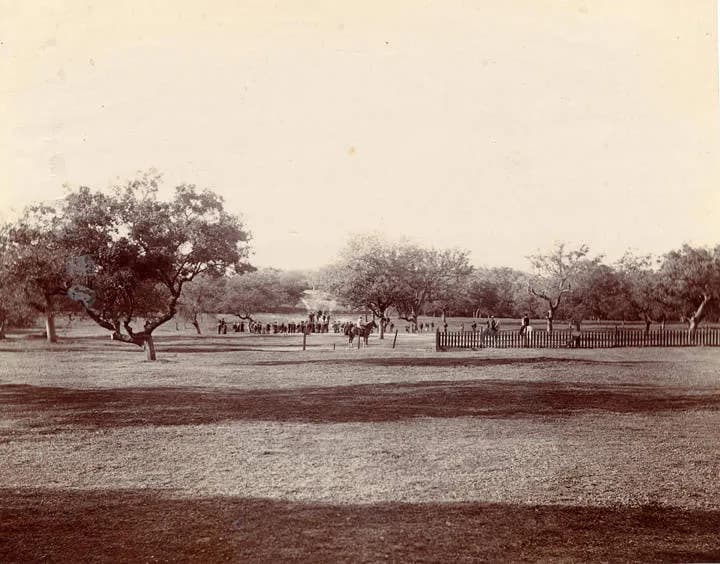
Before 1945, the course had always played 18 holes. Included here are photographs from the 1920's of several of these holes as well as views from this part of the course and a severe flood and its impact.
In the 1911 original layout, this is where the famed "baby hole" was located and the holes eliminated when the property fell into bankruptcy and was sold to a developer who created the neighborhoods east of the present holes #1 and 2. The "baby hole" was less than 100 yards but guarded by a natural hazard.
In the 1920's, this remained a part of the course where you played west to east from what is the parking lot today and then mixed in about 6 holes on fairways which have long since been paved and built over. After the great depression forces the Pasadena Golf Club to dissolve into bankruptcy in 1932, a bank holds onto the course and opens play to the public. No suitor comes along, but in 1938 a catastrophic 24 hours of rainfall hits southern california in March.
The volume of water coming down Rubio canyon flooded homes all along the way and the 7.7 inches of rain in a 24 hour period led to flooding of the course as Rubio Canyon reclaimed her ancient riverbed. These were the days before the present catch basins were built in the canyon mouths to prevent future loss of property, life and limb. Parts of the golf course were washed down nearly three miles to villa street, just north of the present 210 freeway.
Cars were buried and railroad trestles and roadways washed out all across the greater Los Angeles area. The rain fell upon already saturated ground and caused widespread damage across Los Angeles and the San Fernando and San Gabriel valleys. The course was unprotected by the large catch basin below Rubio canyon when the floodwaters reclaimed the path they had taken for centuries before.
With indifference to the homes north of the course along the main drainage and disregard for George O'neills masterpiece, the flood of boulders and mud and water rushed right through the center of the old 18 holes and on down to Pasadena. The water ran fast and deep enough to bury a roadster down around Washington blvd. The usually dry drainage area of the course, for years played as a hazard area became hazardous indeed.
Soon would come along the aforementioned Ms Kerr of mason jar fame and the selling off of half of the property to a developer then donating the land the course sits on today to the county. She sold everything inside of the clubhouse at a profit and left the property to establish her Westmont College where it sits today in south Santa Barbara.
Gallery
From this place
Then & now
How this place changed
Drag the slider to see what stood here before.
On the route
Where it sits
In the app, this stop triggers as you arrive.
You are here
Out now
Hear it where it happened.
Get the free app, stand where this happened, and the story starts on its own.