Back to Altadena Golf Course - Welcome!
1925 - Mirror Lake Reservoir hole looking northeast
Hole #6 of George O'Neill's design in 1920 required a shot over Mirror Lake and then a 45 degree right turn and head up the hill to make par on the current #7 green from about 150 yards out.
Story 5 of 12
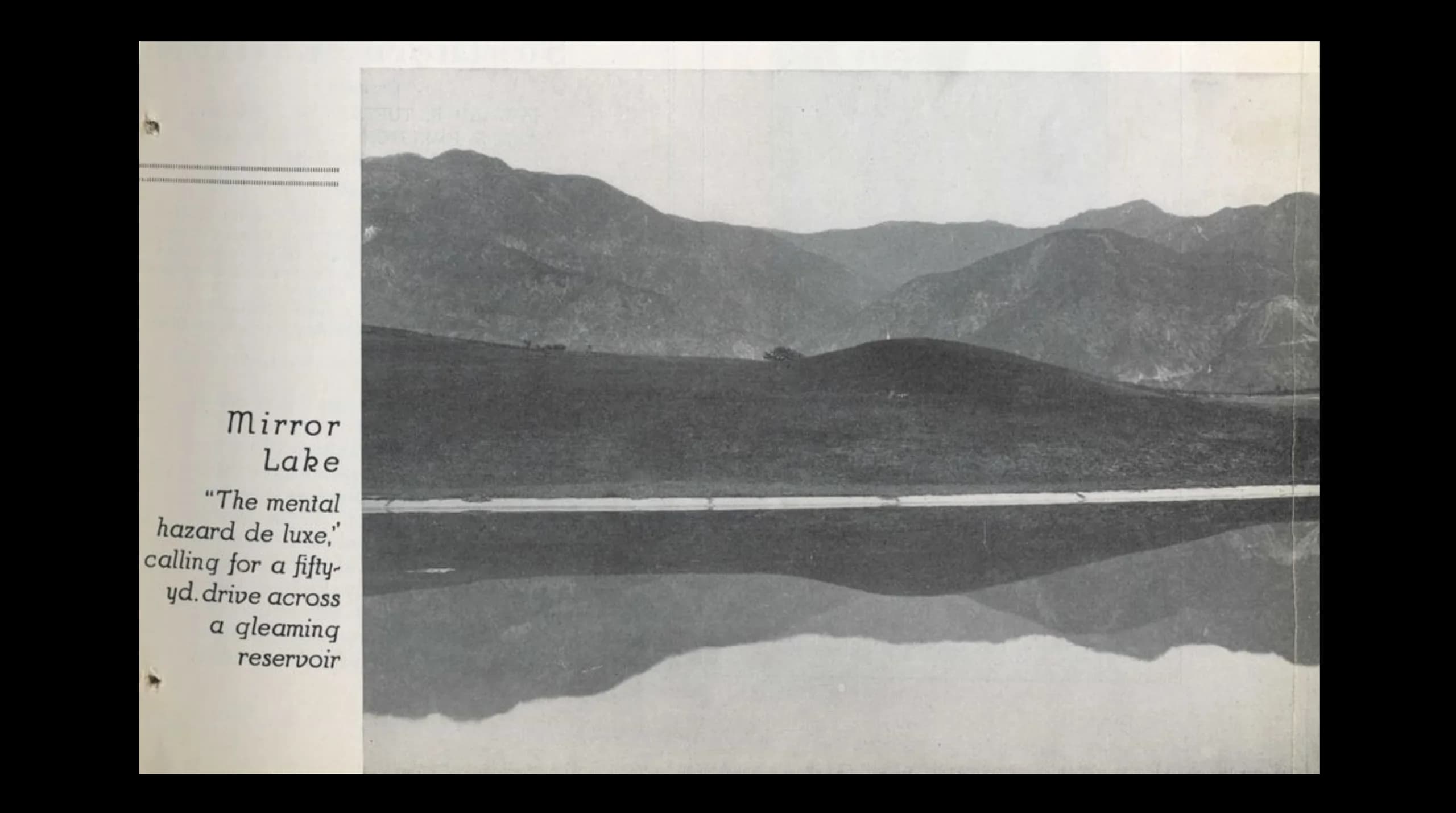
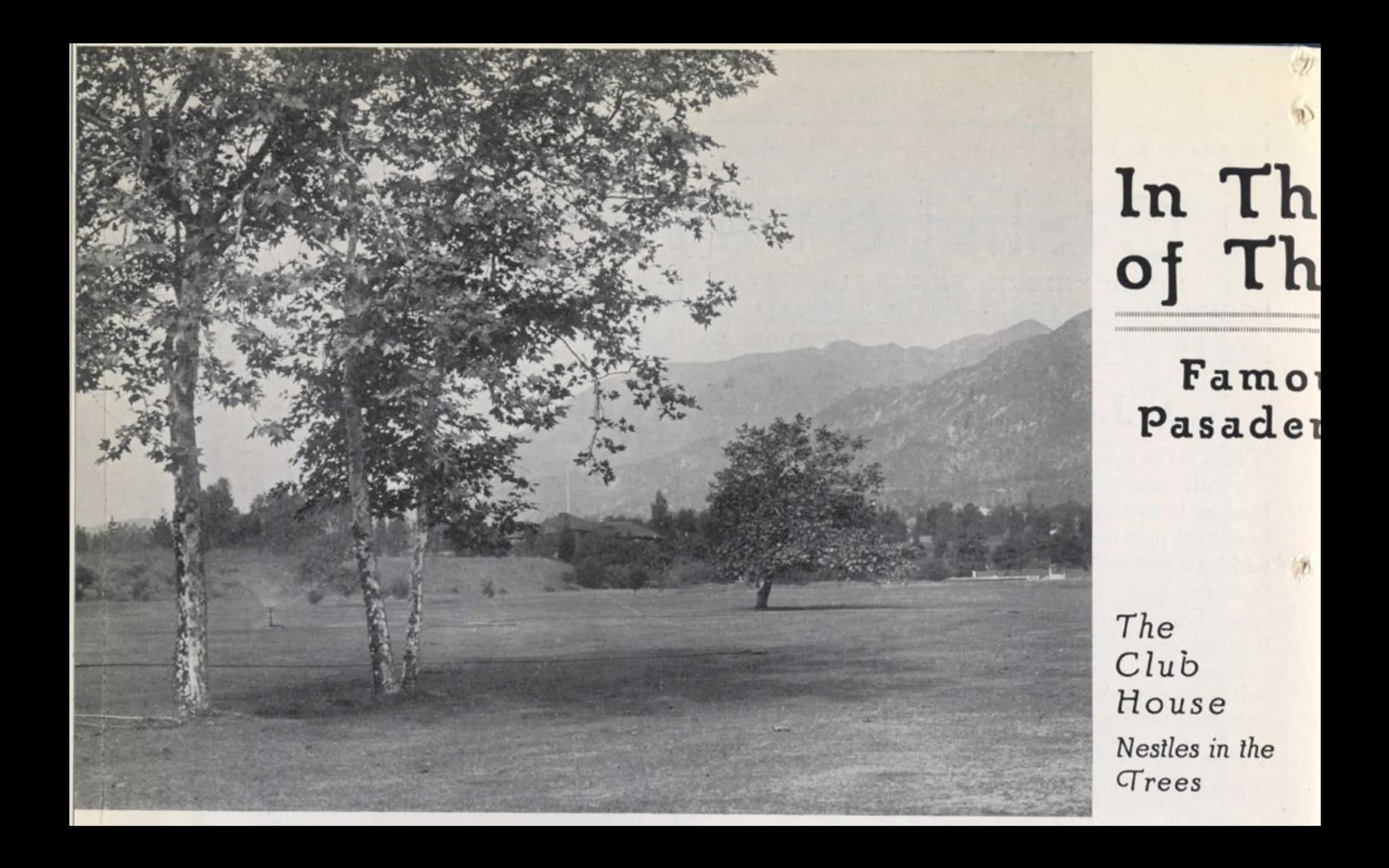
These photographs of what was then called the Mirror Lake Reservoir hole gives you a nice view of where the players of yesterday would be teeing off from. As you finish putting the current number two green, look off to the east as you head down to number 3 tee and imagine that concrete basin full of water and a group of players in plus fours and ladies in long skirts on a tee box beyond the water. They are driving their gutta percha balls right over your head with mashies and baffies.
The number six hole at the Pasadena Golf Club was a dogleg right of about 350 yards heading uphill but with a little imagination, you can see it in your mind's eye today.
Players would need to make sure they got their tee shot in the air or risk sending it to a watery grave. After safely reaching the fairway from a drive due Northwest, the players of yesteryear would turn due north and play to the always inclined current number 7 green (then it was number 6). The course had much smaller trees, most shorter than the players in infancy.
Once you drive your ball on hole 7 later today, you are essentially playing a shorter version of the approach than players in their day would be challenged with. And you felt how the incline of the green matching the incline of the course made your putt much slower going uphill or faster going downhill depending on where you approach shot stopped. This was the same challenge Gene Sarazen and Walter Hagen faced in 1922.
Audio Narration
Tour Route
You are here
Experience This Story On Location
Download the History Cake app to experience this story with automatic audio narration as you visit the location.