Back to HistoryCake Driving Tour - Hwy 14-395 - Introduction and Overview
SFV to Lone Pine 4 - Newhall and Placerita Canyon
Newhall and Placerita Canyon
Story 5 of 38
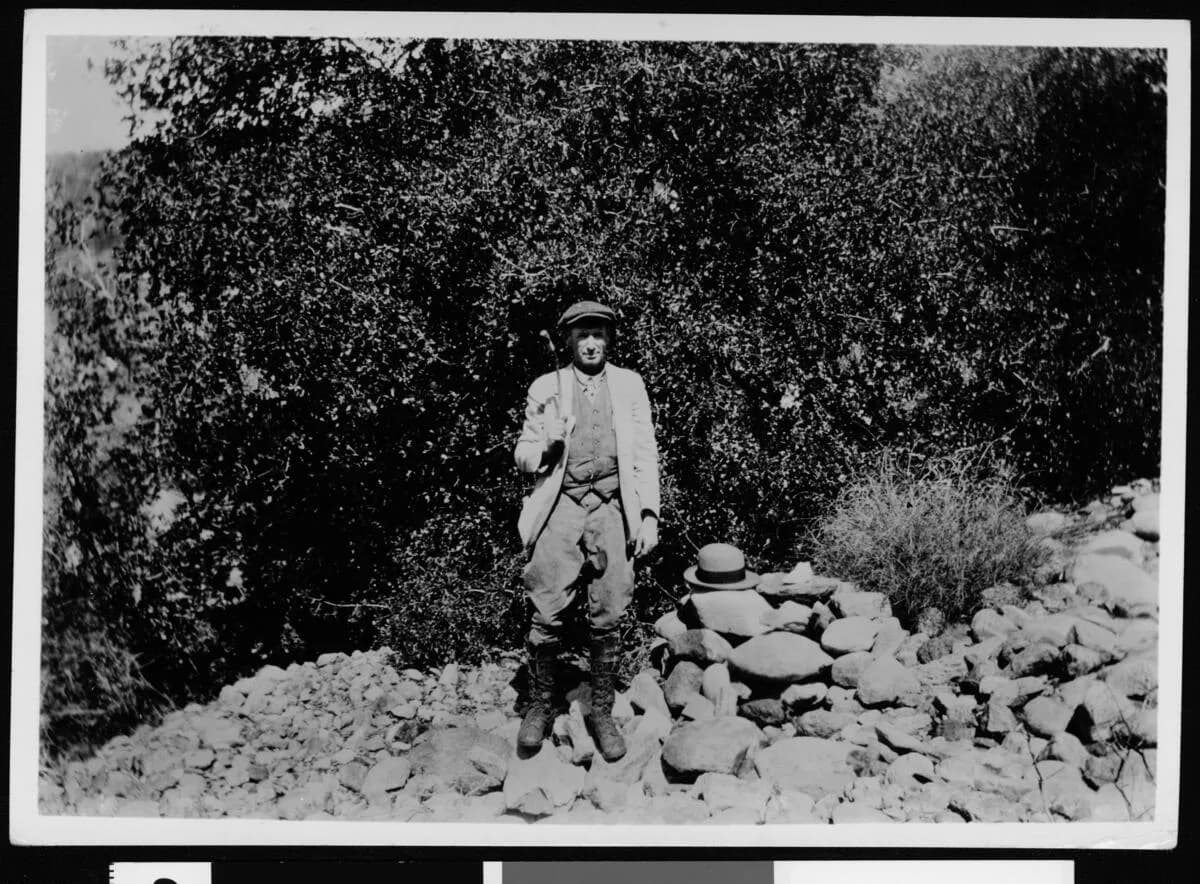
Placerita Canyon and Soledad mines are linked. After Francisco Lopez' 1842 find becomes known, there is a miniature gold rush from Los Angeles which is very much a rancho-supporting settlement of only a few thousand people at the time. For perspective, there are about 8000 people living across all of Alta California, a Mexican province since 1826 and before that, a spanish province of rancheros and farmers and missionaries and native tribes.
The gold at Placerita canyon is called placer gold because it is at or near the surface of current or former stream or river. Legend has it Francisco had stopped to rest in the shade of an oak tree and in pulling up a wild onion stalk, saw flecks of gold in the dirt and roots. Now miners always head upstream from placer finds in hopes of finding the source of the gold or precious metal that has been washed downstream.
This occurred in upstream Soledad and Acton and Ravenna as the gold flowed down the Santa Clara river you are driving beside. Mines were sunk into the hillsides and were initially rich but were nearly exhausted within a few decades and most miners rushed for easier pickings up north. A mostly spanish and mexican contingent is present at the mines in the 1860s and 1870s and the legendary bandit, Tiburcio Vasquez, visited the mining camps in the area. He and other bandits of the 1860s and 1870s often found refuge after depradations in the hispanic section of mining camps. Soledad was one of these and the legend that Vasquez rocks were a place he hid out is certainly possible but not confirmable.
Audio Narration
Tour Route
You are here
Experience This Story On Location
Download the History Cake app to experience this story with automatic audio narration as you visit the location.