 Back to Sphinx Ranch
 Stop 12 of 18
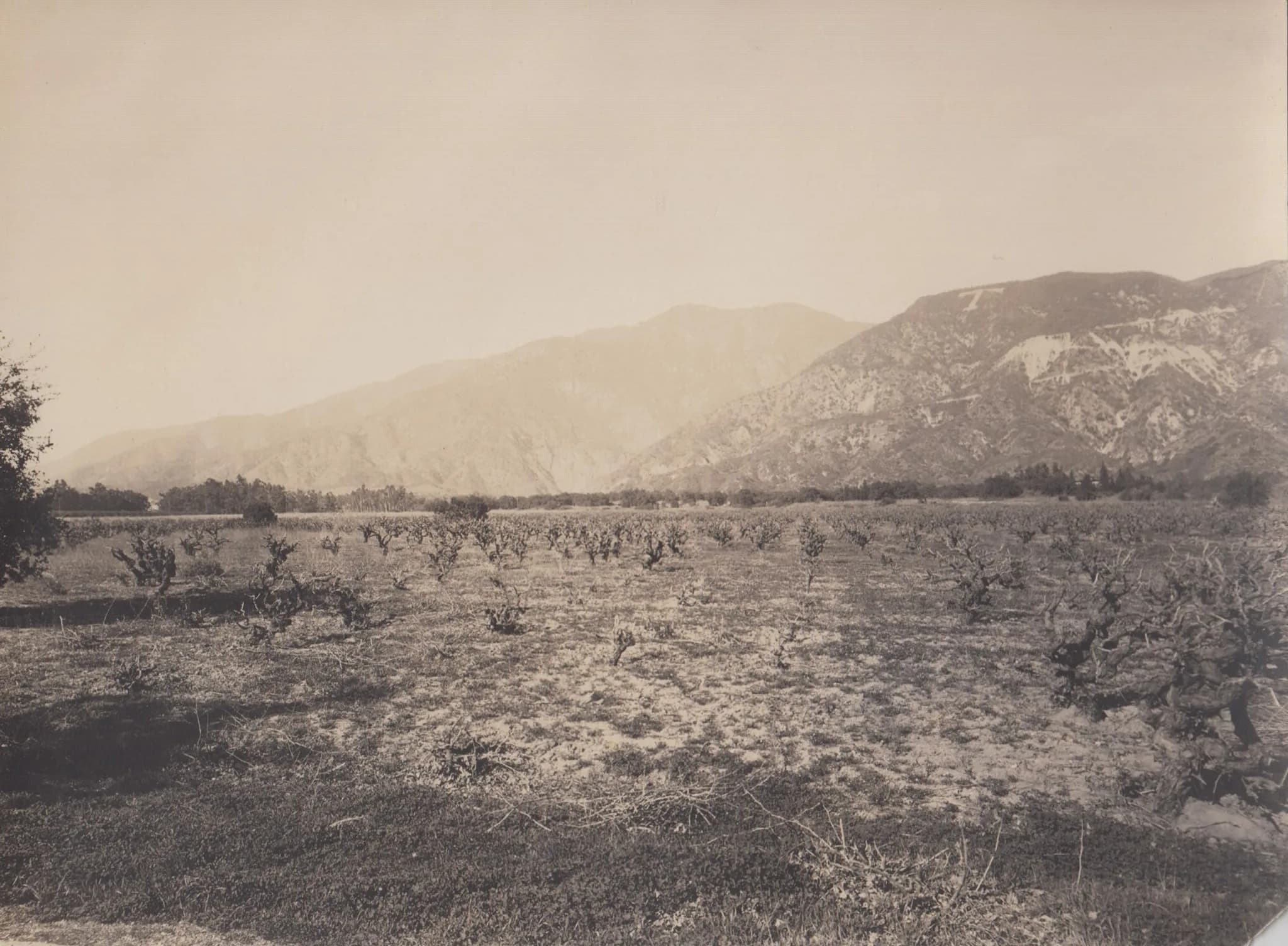
Grapevines - 3 to 4 year old varietals
These vines were grapes for wine planted after the original trial cuttings had succeeded at the southern end of the ranch. Heartier and more blight resistant varietals were introduced in 1885.
Altadena, CAWritten by historians, never AIResearched & written by Marc Striegel
In the app, this story plays on its own as you reach this spot. This page is the preview.
See the full tourListen
Narration
In the app, the full narration plays when you're on location.
The story
Grapevines - 3 to 4 year old varietals
112 acres of three and four year old varietals were planted up here above Midwick following modern day Allen street to the mountains. No homes, no streets, just grapevines...
They included cuttings from Leonard J. Rose's massive vineyards and winery down by where Victory Park now is located as William searched for the heartiest and most profitable varietals for his microclimate.
In 1880 and 81, he augmented his existing Mission vines with 11,000 Zinfandel cuttings (Red - Europe - Montenegro) and 27,000 Blanc Elben (White - Mosul Germany) and 7,500 Burger (White - French Central Valley) cuttings. In 1882, he will roughly double the plantings of 1880 and 81 and add an additional mix of Trousseau (Red - East France) and Charbono (Red - Savoy Region).
A devastating blight known in the day as the "Anaheim Disease" occurs in 1882 and 83 so there were no new additions to the Sphinx vineyards and much of the German wine production in Orange County was devastated and never to return, especially as the Napa Valley wineries start producing in this decade.
Having survived the malady now known as "Pierce's Disease", Allen branched out into new plantings in 1885 and 86 including 65,000 cuttings of the following varietals:
Zinfandel, Chauche Noire (Red - East France), Grenache (Red- Spain), Mataro (Red - Provence Region), Black Burgundy (Red - Burgundy region France), Malbec (Red - South France, Argentina), Carignon (Red - Spain), Orleans Riesling (White, Rhine Valley), Lenoir (Red -California -Pierce disease resistant), Folle Blanche (White, South France - Cognac and Armagnac), Burger, Charbono, Gamay Teinturier (Red - red juice -Boujeaulais) and Tannat (Red-Basque region).
The total amount of profit brought to the ranch from sales of grapes from 1880 to 1886 was about 15,000 dollars - a little over a half million in today's dollars adjusted for inflation - about 100k per annum on average. Imagine having to plant 60,000 of anything and you get the feel of the efforts required to bring in that profit in 1885 on a 500 acre vineyard with accompanying fruit orchards.
On the route
Where it sits
In the app, this stop triggers as you arrive.
You are here
Out now
Hear it where it happened.
Get the free app, stand where this happened, and the story starts on its own.