Back to Saint Francis Dam Driving Tour - Overview
Piru - 1:50 AM; 23 miles downstream
Largely spared due to its elevation, it, like rancho camulos, was used as a first aid and temporary relief station for the victims of the flood disaster. Its cemetery holds the remains of the Gottardi family children and their mother with only the father surviving the deluge as it struck his orchard and farmhouse east of the Kemp siding where over 80 Edison workers lost their lives that cold, early morning in 1928.
Story 9 of 14
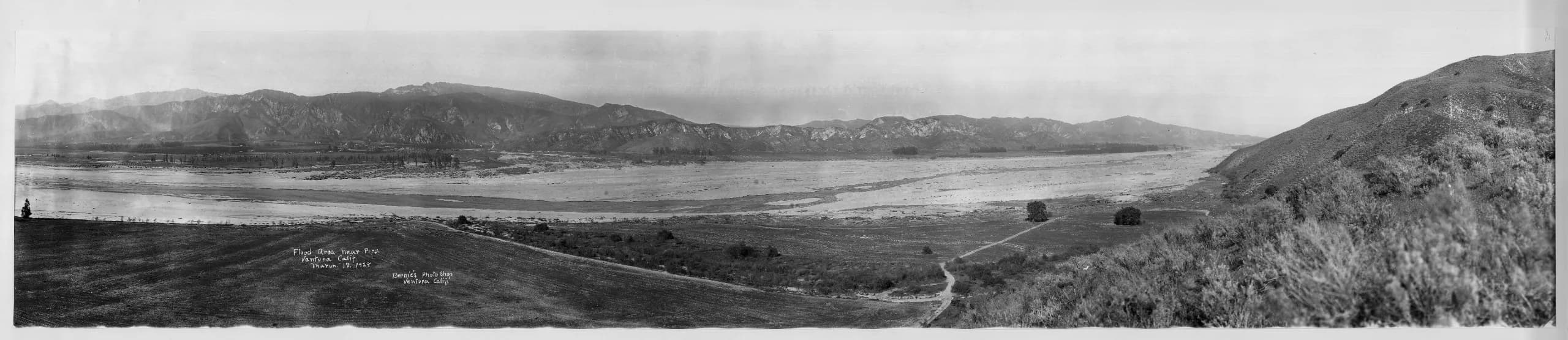
The flood destroyed 20 homes in Piru but no recorded deaths were suffered.
“This town's name is derived from the native term for a reed that grew along the creek banks, and was used in basket-making.”
Piru is a quiet little community, a favorite location for movie companies. One of the largest citrus packing houses in the valley is located here and Piru Lake, approved controlled by the United Water Conservation District, is a recreational area for water skiing, fishing, and camping.
The town itself is a part of the 14,ooo acres of the Piru Fruit Rancho, is situated near the base of the mountains where the Piru Creek and the Santa Clara River meet. It is in the upper end of the Santa Clara Valley, in the eastern section of Ventura County.
The property, which was patented to the Temescal Land Grant, was purchased in 1887 from the Del Valle brothers by David C. Cook of Elgin, Illinois, the proprietor of the greatest publishing house in the United States. This was quickly followed by the founding of the town of Piru City, as it was once called, owned and controlled by Mr. Cook.
Audio Narration
Tour Route
You are here

Experience This Story On Location
Download the History Cake app to experience this story with automatic audio narration as you visit the location.