Back to Canals, Records, and Tidal Ground
The Region That Rebuilt Its Water
A broader historical frame for Mermaid Waters: how nearby canal developments reveal the regional habit of remaking swampy flats into waterfront suburbs, and the consequences that followed.
Gold Coast, Queensland1981Story 5 of 5
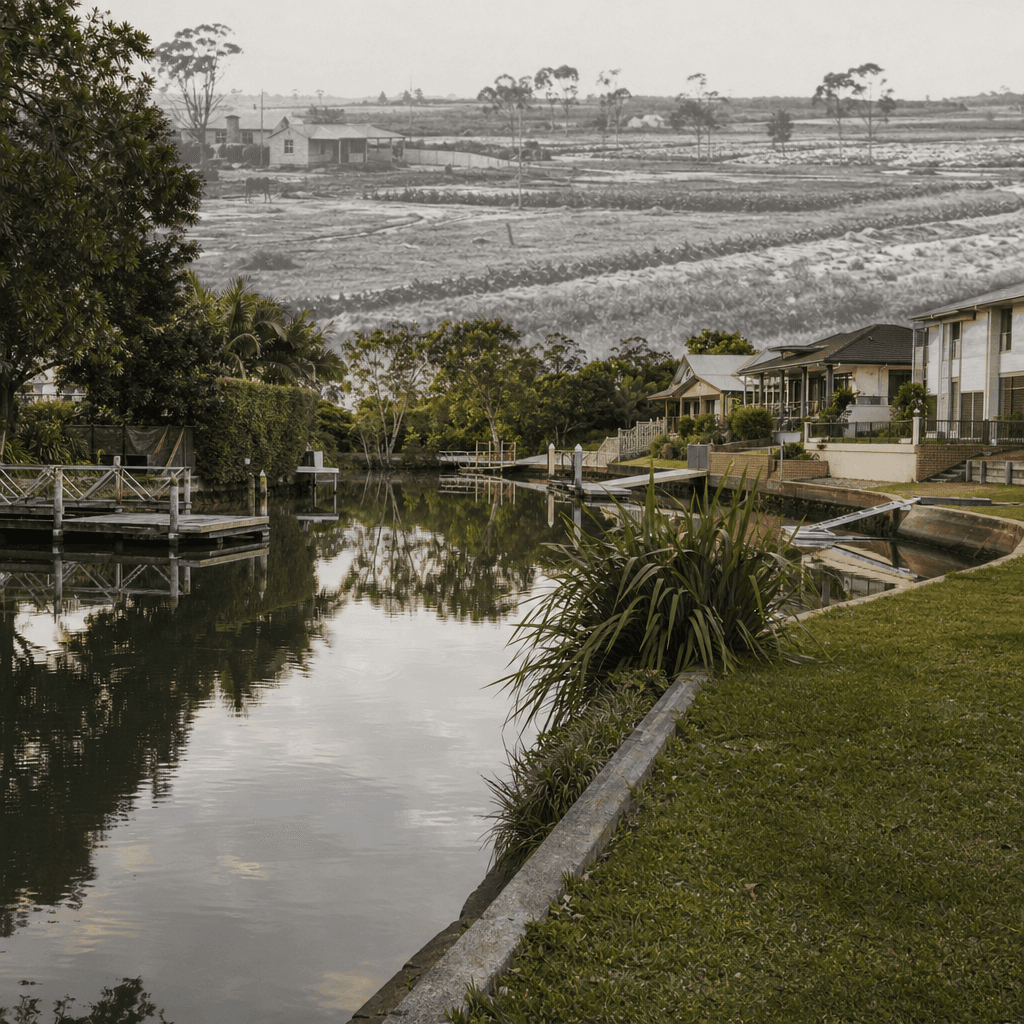
Near 80 Rumrunner Street, Mermaid Waters makes the most sense when you widen the frame. The historical background of Mermaid Waters and the surrounding area is not only the story of one suburb. It is the story of a region that learned to treat wet ground as a design problem.
A nearby example gives that history real weight. Queensland Places records that an early canal project in Broadbeach Waters pumped about two hundred and twenty-five thousand cubic metres of sand onto low land to create an island-style suburb. The same source links the Florida Gardens development to Savoy Corporation funding and to Mick Ress, a Melbourne hotelier. That detail matters because it puts a person inside what can otherwise sound like abstract planning. Someone with money and confidence looked at marshy country and decided it could be engineered into waterfront property.
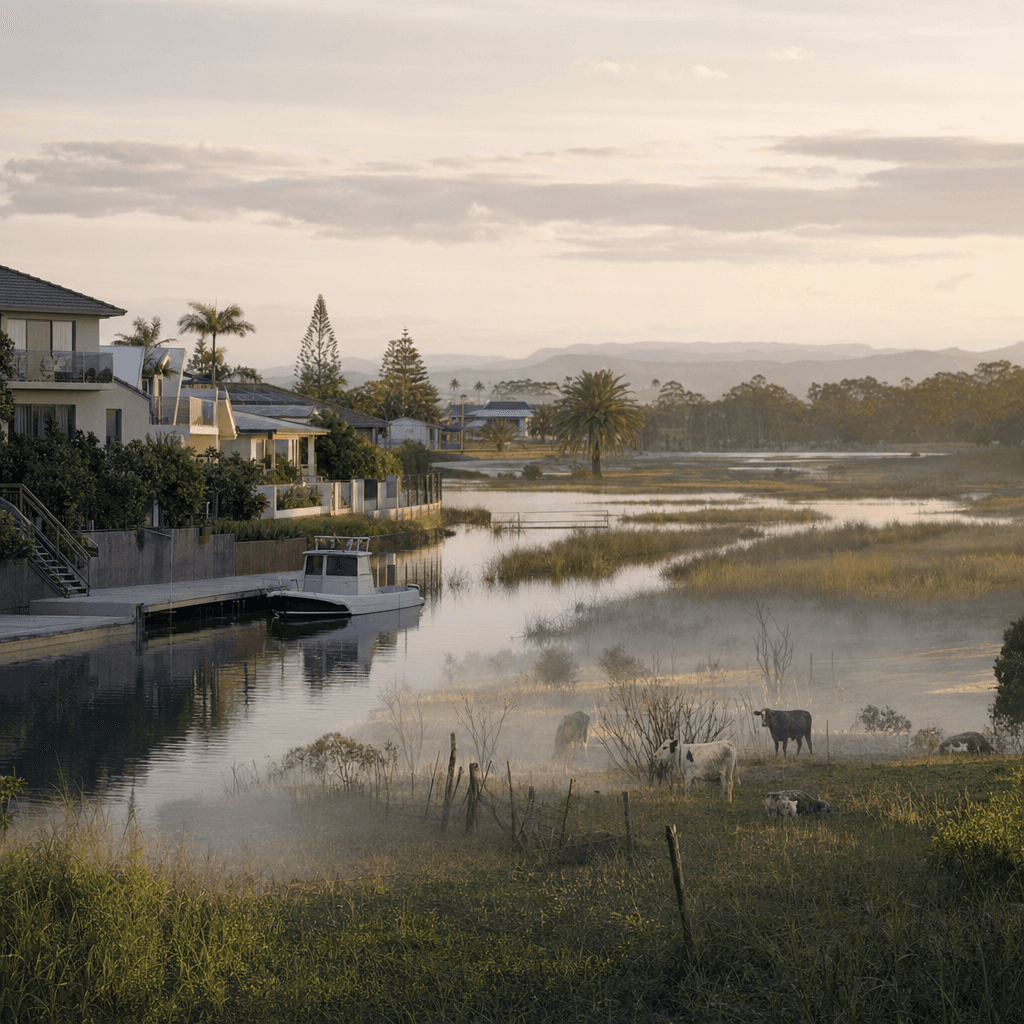
That is the larger background for Mermaid Waters and the surrounding area. Before the suburb name was adopted in nineteen eighty-one, this district was described as flat grazing land, with swamps and drainage running toward Little Tallebudgera Creek. Across this part of the Gold Coast, the pattern became familiar. Drain the flats. Raise the ground. Cut canals where water could add value instead of inconvenience. Then market the result as a lifestyle shaped by the water, even though the water had first been redirected, contained, or carved into place.
What gives this history its tension is that the older landscape never entirely stops speaking. The transformation brought prosperity and a new suburban identity. It also meant the loss of much of the wet ground that once absorbed and spread water in its own way. Later flood vulnerability across canal estates has made that trade-off harder to ignore. In that sense, the historical background of Mermaid Waters is not just about growth. It is about a long regional confidence in remaking land, and the reminder that low country keeps a memory of what it used to be.
That makes these waterways feel slightly different once you know the backstory. They are not simply decorative edges to suburbia. They are evidence of a Gold Coast habit: taking difficult ground and insisting it could be persuaded into order.
Audio Narration
Tour Route
You are here
Experience This Story On Location
Download the History Cake app to experience this story with automatic audio narration as you visit the location.