Back to Canals, Records, and Tidal Ground
Ground That Had to Be Remade
A historical background of Mermaid Waters told through the older wet landscape beneath its canals and streets.
Gold Coast, Queensland1981Story 4 of 5
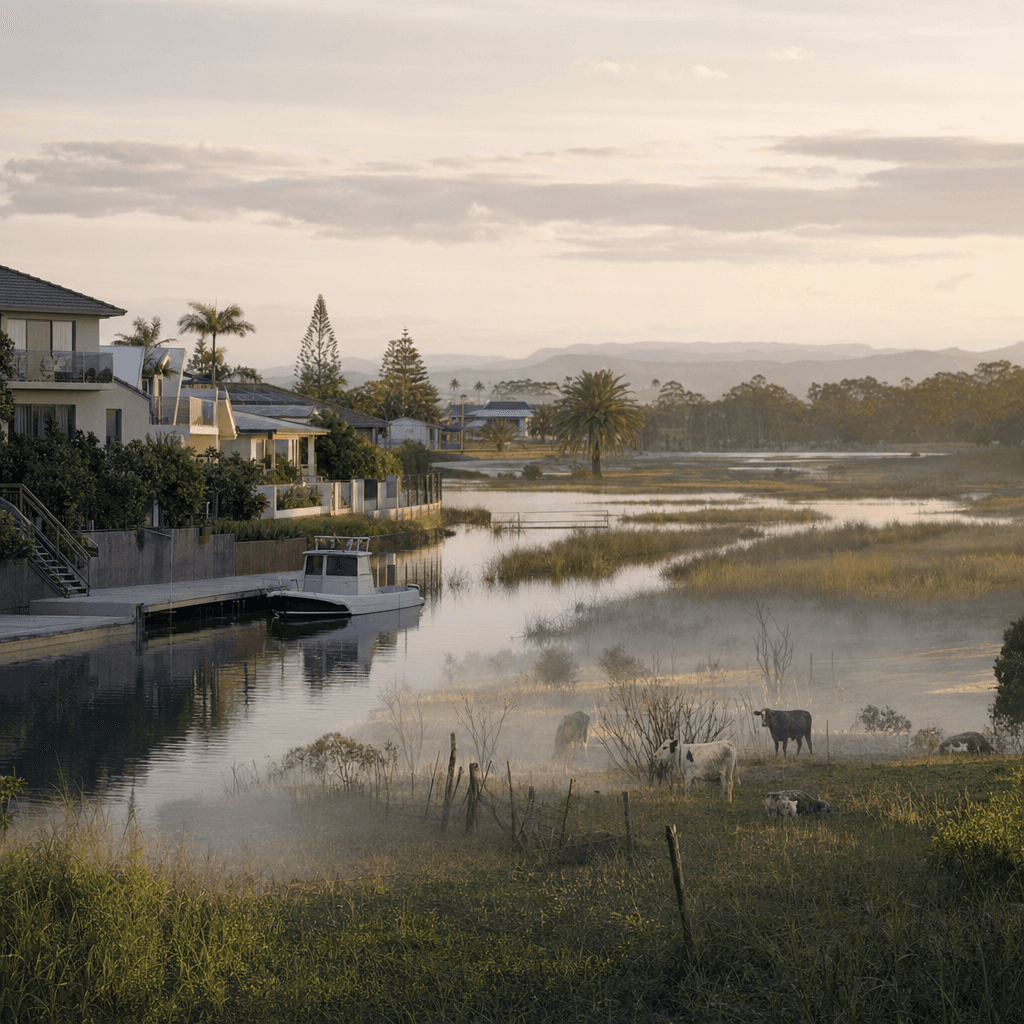
As you walk here, it helps to picture the suburb before its waterfront identity took hold. Queensland Places describes this area as flat grazing land broken by swamps, with drainage running toward Little Tallebudgera Creek. That detail changes the whole scene. The neat edges and canal views belong to a much newer version of the landscape than they first appear to.
The historical background of Mermaid Waters is, in large part, a story of remaking wet ground. Major canal-estate development came in the nineteen seventies and nineteen eighties, and Queensland Places notes that the suburb was formally named in nineteen eighty-one. So the place now known for residential waterways is recent in name and form. Earlier on, this was part of a broader coastal plain where water spread, lingered, and moved according to the land rather than to property lines.
That older landscape also helps explain a wider pattern in the surrounding district. In the nineteenth century, settler Stephen Tobin petitioned for a marine survey of Tallebudgera Creek, hoping the waterway might better serve trade. It was not Mermaid Waters as a suburb, and that distinction matters. Still, it shows a recurring local habit: people looked at these creeks, wetlands, and low-lying channels not only as obstacles, but as working water that might be redirected toward opportunity.
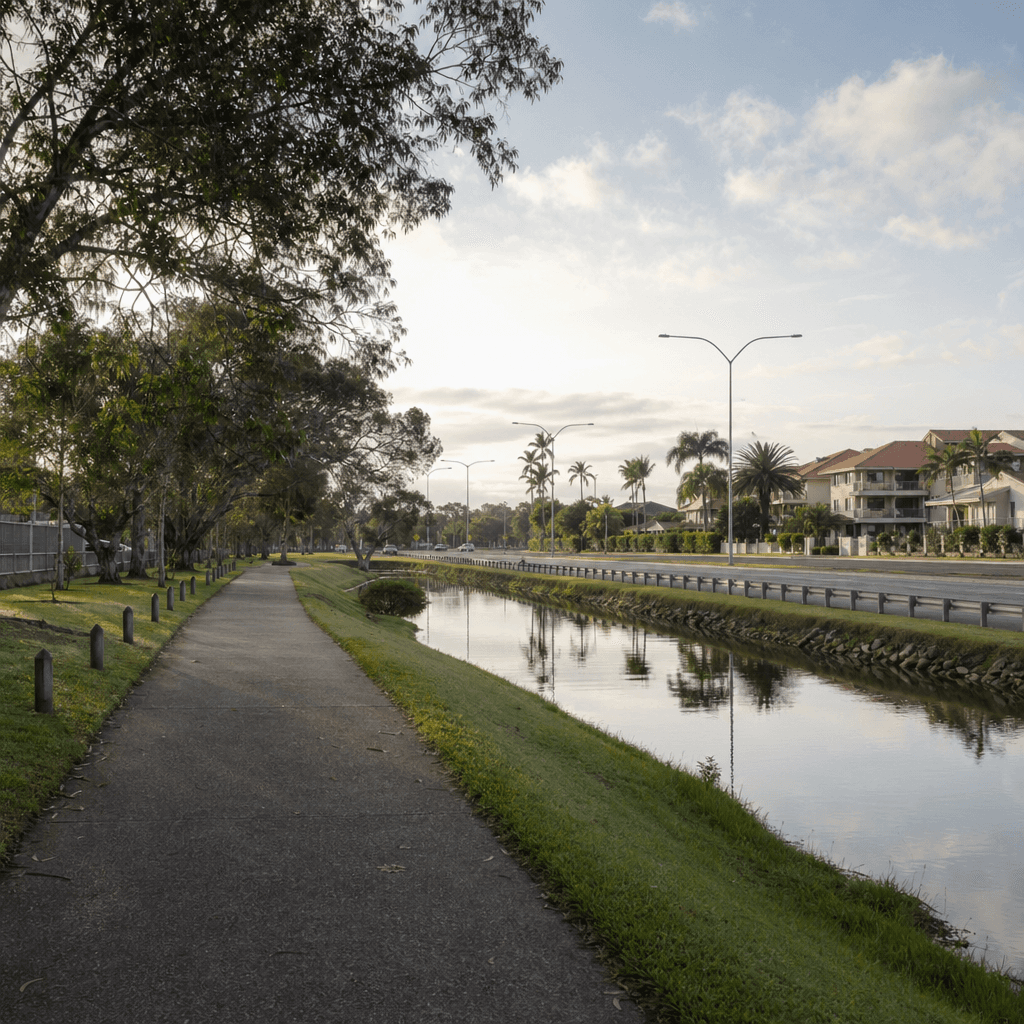
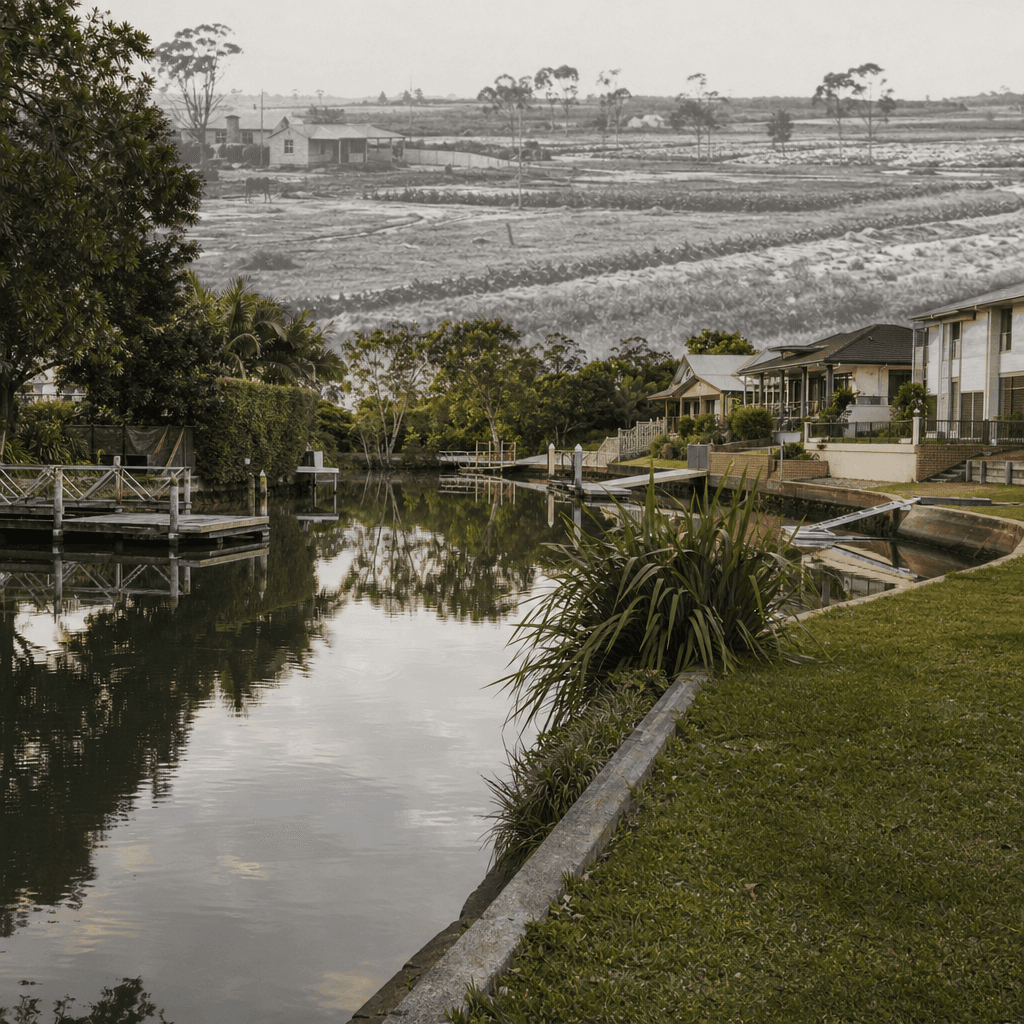
By the late twentieth century, that impulse had taken a different form. Across the Gold Coast, canal-estate planning, dredging, and drainage turned altered floodplain country into a new suburban ideal. Here, the result was not simply houses added to dry land. The ground itself had to be reshaped. What had once been swampy, uneven, and seasonally wet was taught to hold streets, yards, and waterfront lots.
That is the quiet tension beneath the walk. The suburb gained its identity by bringing water close, while also suppressing the older ways water moved across the plain. Much of that earlier world was erased from view, yet the flatness remains, and so does the memory of a landscape that was never naturally fixed. The history is not only in when the suburb was named. It is in the fact that this setting had to be engineered before it could look ordinary.
Audio Narration
Tour Route
You are here
Experience This Story On Location
Download the History Cake app to experience this story with automatic audio narration as you visit the location.