 Back to Historycake Landscape, Life and Mining/Geology Tour - Highway 395 and 14
Jawbone Canyon: A Huge Siphon for aqueduct water
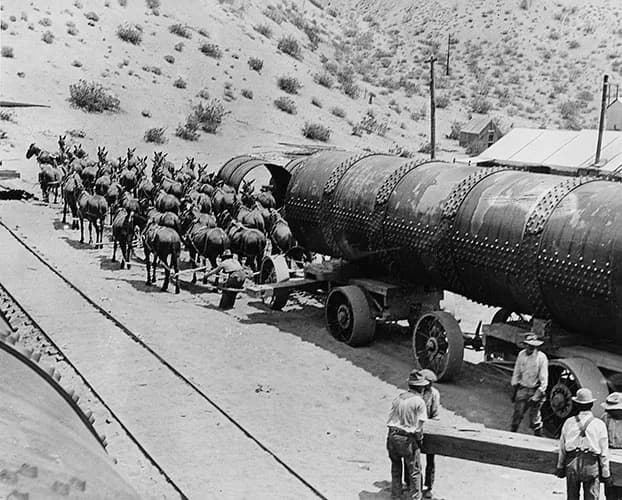
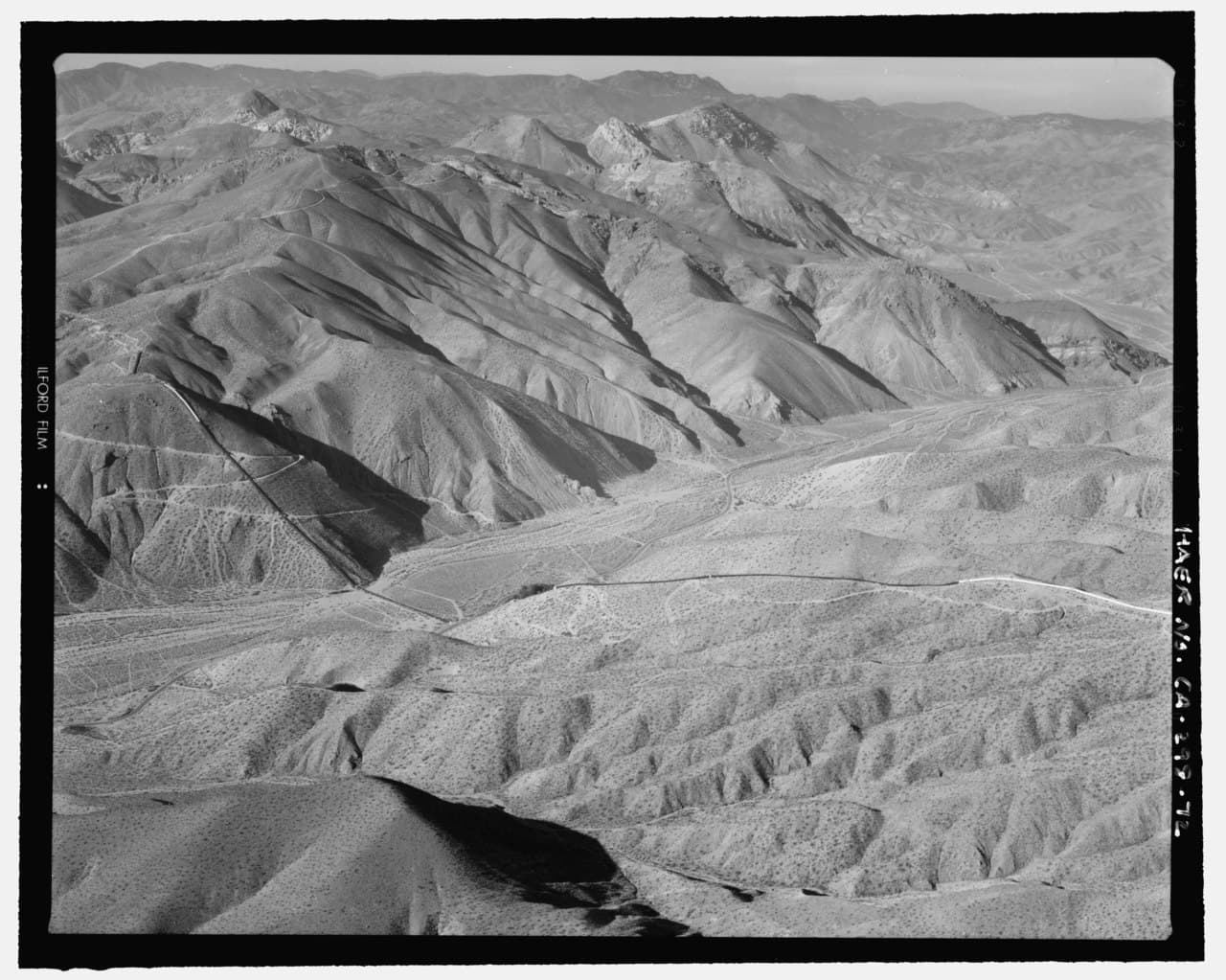
Off to your west, a large black steel pipe lays down one canyon wall and climbs up the other. It is called the Jawbone Siphon, and it is the biggest pressure tube on the Los Angeles Aqueduct.
In the app, this story plays on its own as you reach this spot. This page is the preview.
See the full tourListen
Narration
In the app, the full narration plays when you're on location.
The story
Jawbone Canyon: A Huge Siphon for aqueduct water
Around it lie a mining ghost district, Kawaiisu rock art, and a desert spring that draws migrating birds by the thousands and off road enthusiasts in similar numbers.
The Jawbone Siphon is the largest of the inverted siphons on the Los Angeles Aqueduct, the longest in the world at the time and completed in 1913 after about five years of work from Los Angeles to the northernmost Owens Valley.
To carry Owens river water across this gap by gravity alone, engineers under William Mulholland built a riveted pipe roughly 8,095 feet long that drops about 850 feet to the canyon floor before climbing the far side, its diameter swelling from about 7.5 to 10 feet to handle the pressure. Mulholland himself called it the "Jawbone Siphon."
It was blown up with dynamite by angry owens valley residents in the 1920s during the "water wars" and it did burst in a hard freeze in 1988. It still does the job today at over 100 years of age.
The canyon was named around 1860 by settlers who thought its forked ridges resembled a jawbone. Prospectors sunk mines and pulled out gold and silver between 1860 and 1875 before they played out and the miners went in search of shinier pastures...
Long before any of this post-contact history of the land, this was the country of the Kawaiisu, and other neighboring Numic-speaking peoples who came seasonally to hunt and gather piñon.
Old pictographs survive on rocks in the area, though their makers are not definitively known.
A few miles up-canyon lies Butterbredt Spring, named for pioneer Frederick Butterbredt. Today that spring is a celebrated Pacific Flyway stopover where migrating birds pour through each spring, and the surrounding Jawbone-Butterbredt lands are both an off-road playground and a protected conservation area to this day!
Gallery
From this place
On the route
Where it sits
In the app, this stop triggers as you arrive.
Stop 21 of 50
Out now
Hear it where it happened.
Get the free app, stand where this happened, and the story starts on its own.