 Back to Historycake Landscape, Life and Mining/Geology Tour - Highway 395 and 14
California City to the east
Off to east a few miles lies California City, the metropolis that was meant to rival Los Angeles but did not.
In the app, this story plays on its own as you reach this spot. This page is the preview.
See the full tourListen
Narration
In the app, the full narration plays when you're on location.
The story
California City to the east
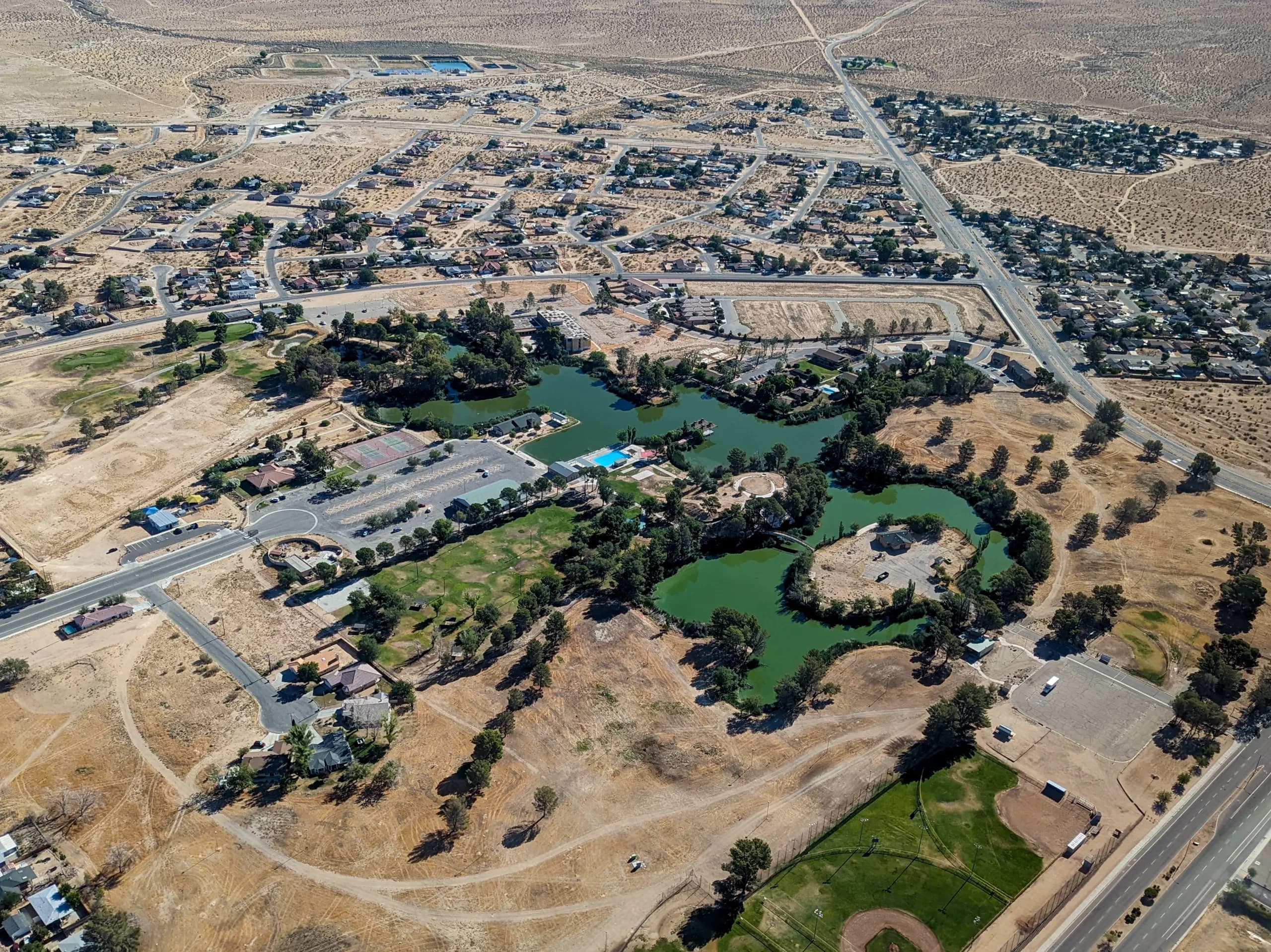
Off to your right, a road peels east toward one of the strangest places in the Mojave. California City looks ordinary from the highway, but stretching past its small downtown is a vast grid of paved streets with almost nothing on them — curbs, cul-de-sacs, and named avenues scratched into the creosote, waiting for houses that never came.
In 1958 a sociology professor turned developer, Nat Mendelsohn, bought some 82,000 acres of desert out here and set out to build a city to rival Los Angeles. The master plan, drawn up with landscape architect Garrett Eckbo, imagined 400,000 residents gathered around a green Central Park and a 26-acre lake. Salesmen sold lots hard. When the town finally incorporated in 1965 it held about 800 people.
Today it is California's third-largest city by area — over 200 square miles — yet home to only about 14,000 people.
The lake and park and oasis-like feel of its greenery in such an otherwise harsh environment must have been a refreshing stop for native Numic people and Remi Nadeau and his mule teams hauling ore to Mojave and its train station. If you have a high clearance vehicle, you can still drive on one of Nadeaus arrow straight roads out of Northeast California city and get off the main highways for an hour on his very navigable dirt road.
Just off of Nadeau's road is the Desert Tortoise Research Natural Area (DTNA), 40 square miles of prime natural habitat set aside for the desert tortoise, the official California State Reptile.
The preserve boasts a rich flora and fauna unique to the intricate Mojave Desert ecosystem. In 1980, the Bureau of Land Management or BLM, recognized the significance of the Natural Area by designating it a "Research Natural Area" and "Area of Critical Environmental Concern".
On the route
Where it sits
In the app, this stop triggers as you arrive.

Out now
Hear it where it happened.
Get the free app, stand where this happened, and the story starts on its own.