 Back to HistoryCake Driving Tour - Highway 14 and the 395 - Welcome and Overview
Stop 34 of 57
The Coso Silver Rush and the legend of the Lost Ledge
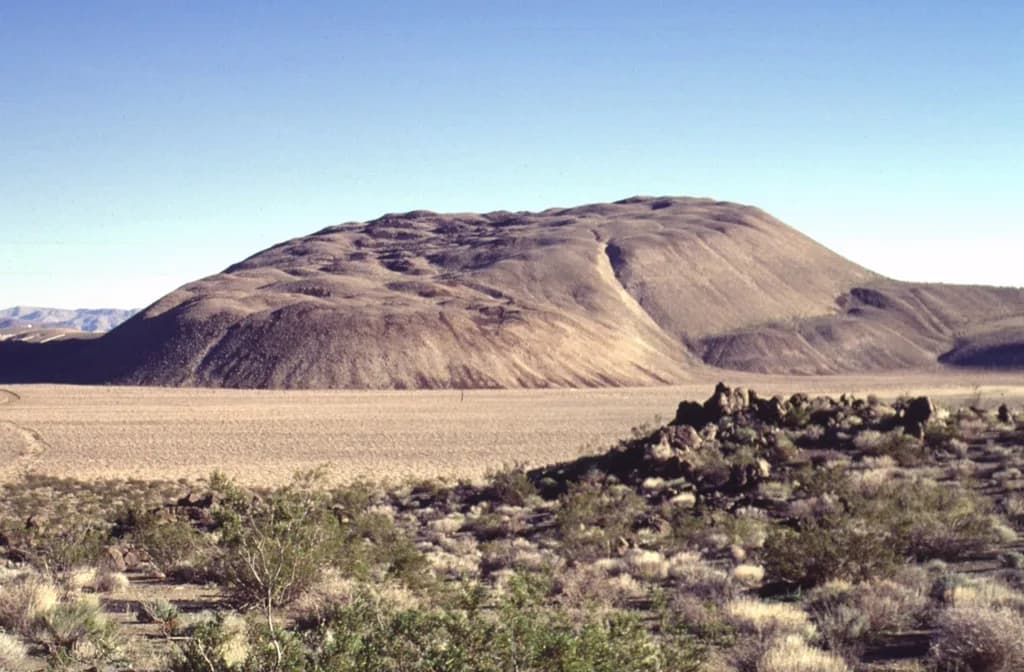
Off to your east rise the Coso Range, where prospectors struck real ore in 1860 — one of the earliest mining rushes in this corner of California.
CA1860-1862Written by historians, never AIResearched & written by Marc Striegel
In the app, this story plays on its own as you reach this spot. This page is the preview.
See the full tourListen
Narration
In the app, the full narration plays when you're on location.
The story
The Coso Silver Rush and the legend of the Lost Ledge
Off to your east rise the Coso Range, where prospectors hunting a "lost" silver ledge from which a gunsight was made in haste by a 49er crossing the desert - struck real ore in 1860 — one of the earliest mining rushes in this corner of California.
Within weeks, 500 men had stampeded in from over Walker Pass and the gold fields of the western flanks of the Sierras. They headed across the present highway and the dry bed of Owens Lake, to the dark volcanic Coso Range.
Long before any prospector arrived, these mountains belonged to Numic-speaking peoples — ancestors of today's Timbisha Shoshone and Paiute. They quarried world-famous Coso obsidian here and they left tens of thousands of petroglyphs in the canyons, one of the densest concentrations of rock art on Earth.
In the spring of 1860, fresh off the Comstock excitement in Nevada, Dr. Darwin French led a party out of Visalia, over Walker Pass and into these hills, chasing the legendary "Lost Gunsight" silver ledge said to have been found by a stranded 1849 emigrant. They never found that ledge — it may never have existed — but they hit genuine silver ore in the Coso Range and organized the Coso Mining District in May 1860.
The rush was fast and feverish. By late June, reportedly some 500 men had poured in, and assays of $1,000 to $2,000 a ton fired the imagination. It didn't last. The ore was patchy, water and timber scarce, the desert unforgiving, and the Owens Valley Indian War of 1862-63 made the country dangerous.
The Anglo miners largely drifted off to safer grounds, and the district was reorganized by Mexican prospectors in 1868. Coso's real legacy might be what it set in motion. It brought prospectors here who then fanned out and began moving from boom town to boom town as the diggings went bust where they were.
Today the heart of the old district lies safely inside the restricted Naval Air Weapons Station China Lake, very off-limits except a few times a year on guided tours — its silver and gold tapped out but its rock art legacy carefully guarded.
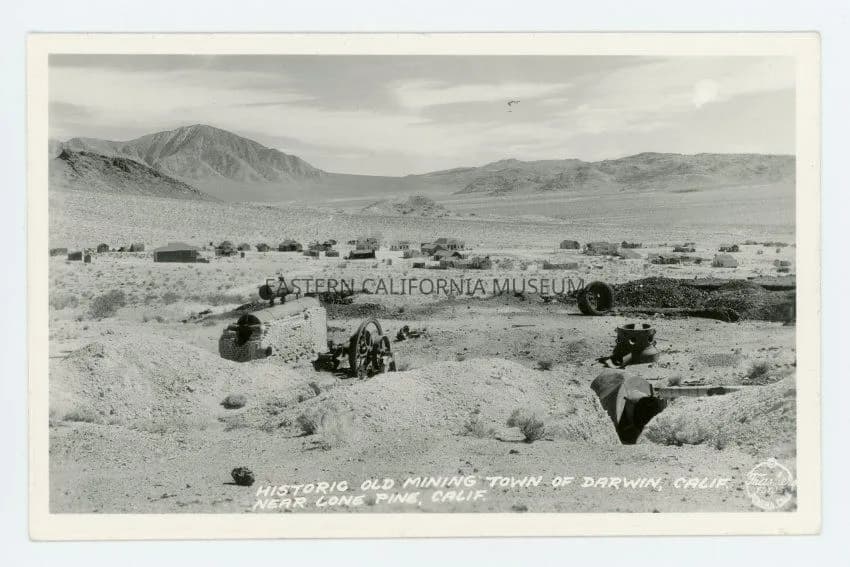
Lead and silver have been mined in Darwin at the northern tip of the Coso district, a town named after the good Dr. French ever since and Jack Stone continues hard rock mining for Galena and Silver below Ophir Hill above and below tiny Darwin and its 50 odd residents.

Almost here
Hear it where it happened.
The History Cake app is in the final stretch. Leave your email and we'll send one note when this story can play for you on the spot.
Be first in line
One email at launch. No worries, no spam.