 Back to HistoryCake Driving Tour - Highway 14 and the 395 - Welcome and Overview
Stop 33 of 57
The Coso Volcanic Field
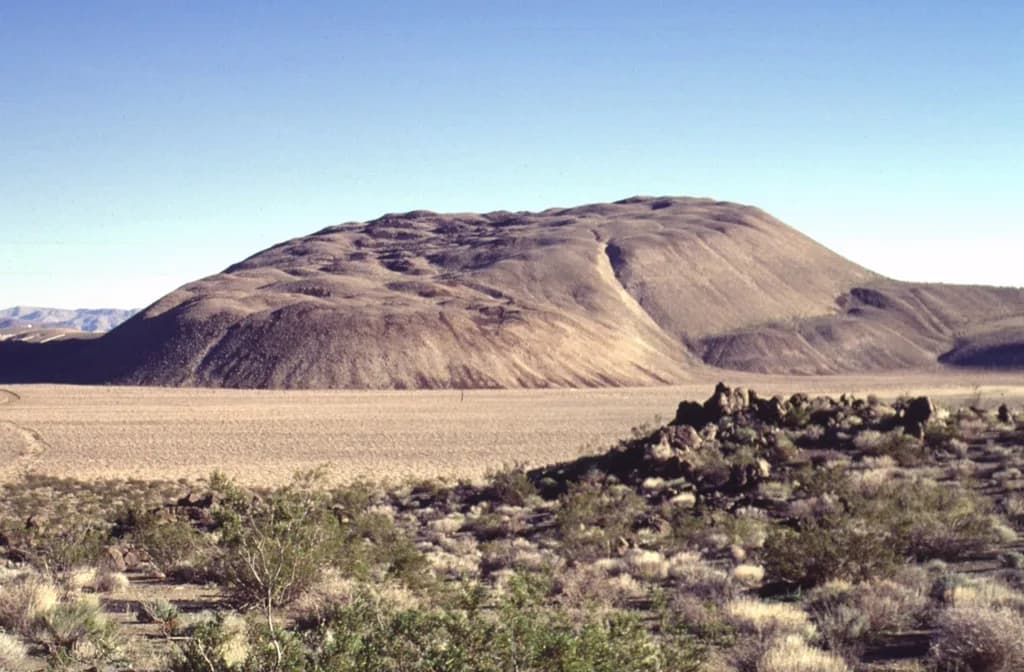
All around Coso Junction rises a young volcanic country of gray rhyolite domes and dark basalt cinder cones. Obsidian from eruptions and flows armed native toolmakers with spearpoints as sharp as broken glass and a commodity to trade all across California with other tribes. A geothermal hot spring and energy source, both modern and ancient also sit amongst the burnt and baked field of volcanics.
Olancha, CA~6 million yrs ago to present; obsidian quarried ~3000-1000 yrs ago; geothermal online 1987Written by historians, never AIResearched & written by Marc Striegel
In the app, this story plays on its own as you reach this spot. This page is the preview.
See the full tourListen
Narration
In the app, the full narration plays when you're on location.
The story
The Coso Volcanic Field
As we turn our gaze east, the desert dramatically turns volcanic. The Coso Volcanic Field is a 250 square mile box of pale rhyolite domes and dark basaltic cinder cones, the youngest barely 40,000 years old, yesterday in geologic timeframes...
The largest dome, Sugarloaf Mountain, swells nearly a thousand feet above its base. The eruptions which created the charred landscape around you began roughly 6 million years ago and peaked around 3 million years ago. Native Pauite Shoshone used the still active hot springs for ceremony and they harvested flaked obsidian, lighter and sharper than flinted stone. A superior weapon for the tip of an arrow or spearhead and a more precise scraping and cutting tool around the campfire. This form of eruptive lava is cooled quickly and the strongest obsidian is formed when it is cooled quickest - in liquid. With the Sierras to the west and the Argus range to the east and the owens river to the north, there is plenty of available groundwater and has been for eons.
For the Numic-speaking peoples of this country, the ancestors of today's Paiute and Shoshone, Coso was a quarry of the highest regard. Tools knapped from Coso glass have been found from the Mojave to San Diego, Santa Barbara, and all the way north up the Pacific shore. The heaviest quarrying ran from about 3,000 to 1,000 years ago but it was not about precious metals sought so voraciously post-contact, it was about their precious obsidian.
The hot springs now on the base of the Naval Air Station also have a long spiritual and practical history. Coso Hot Springs, where water surfaces at near its boiling point, was a healing and ceremonial place. The Paiute Shoshone and Numi natives built sweat lodges and performed rituals of importance and solemnity. There are also pictographs and petroglyphs which survive intact as they lay inside the boundaries of the very secure China Lake NAS. Local Native people still return for ceremonies land historical societies arrange occasional visits but other than these exceptions, the Matranga museum is your best bet to explore them in greater depth.
It is interesting to note that after being a tourist spot in the early 20th century, complete with huts and mud baths - that since 1987 the Navy has tapped this underground heat directly to produce energy. The Coso geothermal plants draw steam from wells thousands of feet deep, producing well over 100 megawatts, a source of modern day energy built atop a sacred and ancient one.

Almost here
Hear it where it happened.
The History Cake app is in the final stretch. Leave your email and we'll send one note when this story can play for you on the spot.
Be first in line
One email at launch. No worries, no spam.