Back to Mapped Tides and Shop Lights
Sunlight on the Sewing Floor
A postwar clothing factory on Pittwater Road reveals Dee Why as a place of migrant women’s work as well as surf and suburb, on Aboriginal land with deep and continuing presence.
Sydney, New South Wales1951-01-08Story 5 of 5
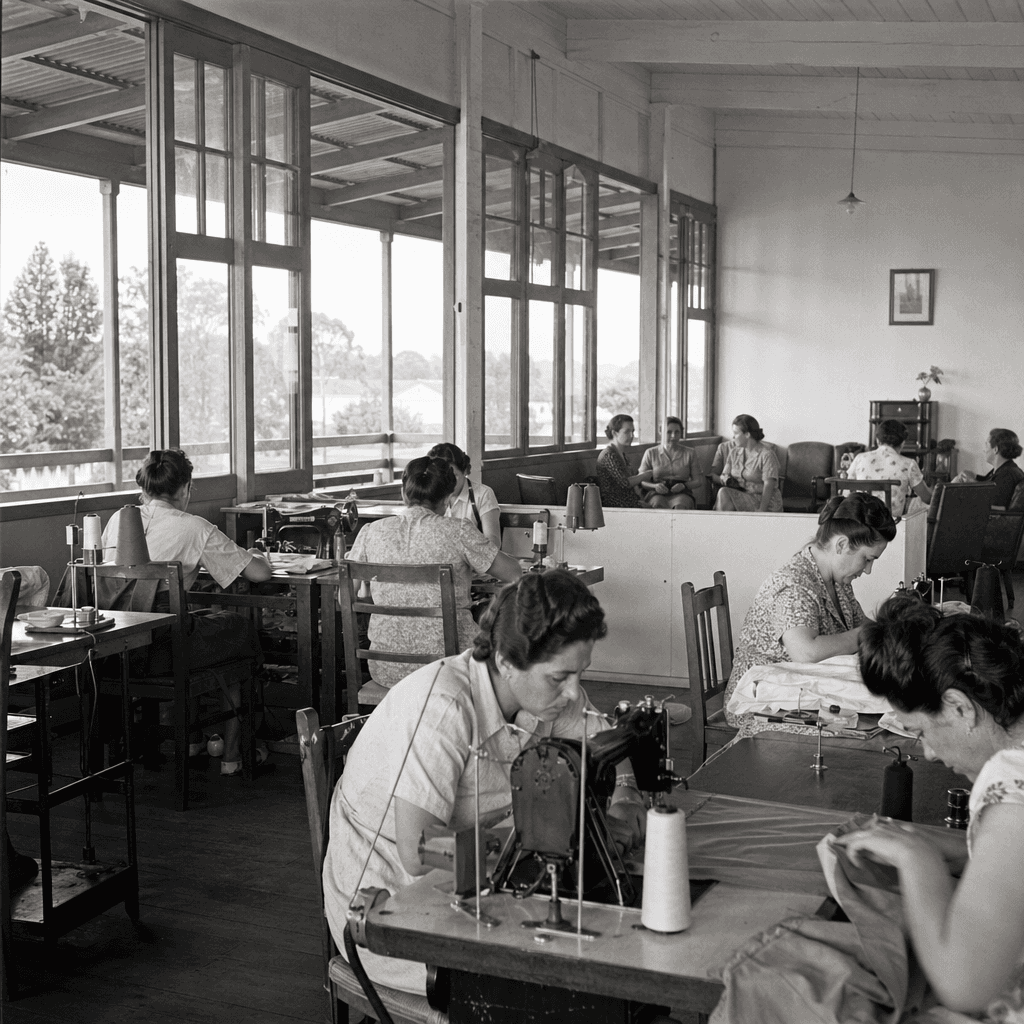
When this clothing production centre opened at 800 Pittwater Road in 1951, it carried a very modern idea of work. Reports around its opening made a point of the design itself: natural light, ventilation, a verandah to soften the afternoon heat, and a recreational area built into the plan. That is the surprising part. The building was industrial, but it was also being sold as humane.
And the people who made that promise matter just as much as the architecture. This was one of the places where postwar Dee Why was stitched together by women’s paid labour, especially migrant women and especially Italians. No single machinist is securely named in the records behind this story, so the clearest human picture is collective. Women at sewing machines. Piece by piece, garment by garment. Wages carried home and folded into rent, groceries, children’s shoes, the ordinary scaffolding of family life. The beach suburb image can make that easy to miss. Yet for many families, Dee Why was not only a place of leisure or new housing. It was also a place of shift work, skill, and tired hands.
That makes this site a useful correction to the local postcard version of the suburb. In the late nineteen forties and early fifties, change here was not only happening through subdivisions and shops. It was happening through industry. A men’s wear factory on a main road tells you that suburban growth needed production as well as consumption. It also tells you who was often asked to carry that transition. Women’s labour made itself indispensable, then was too often treated as temporary or secondary once ownership changed and production moved on.
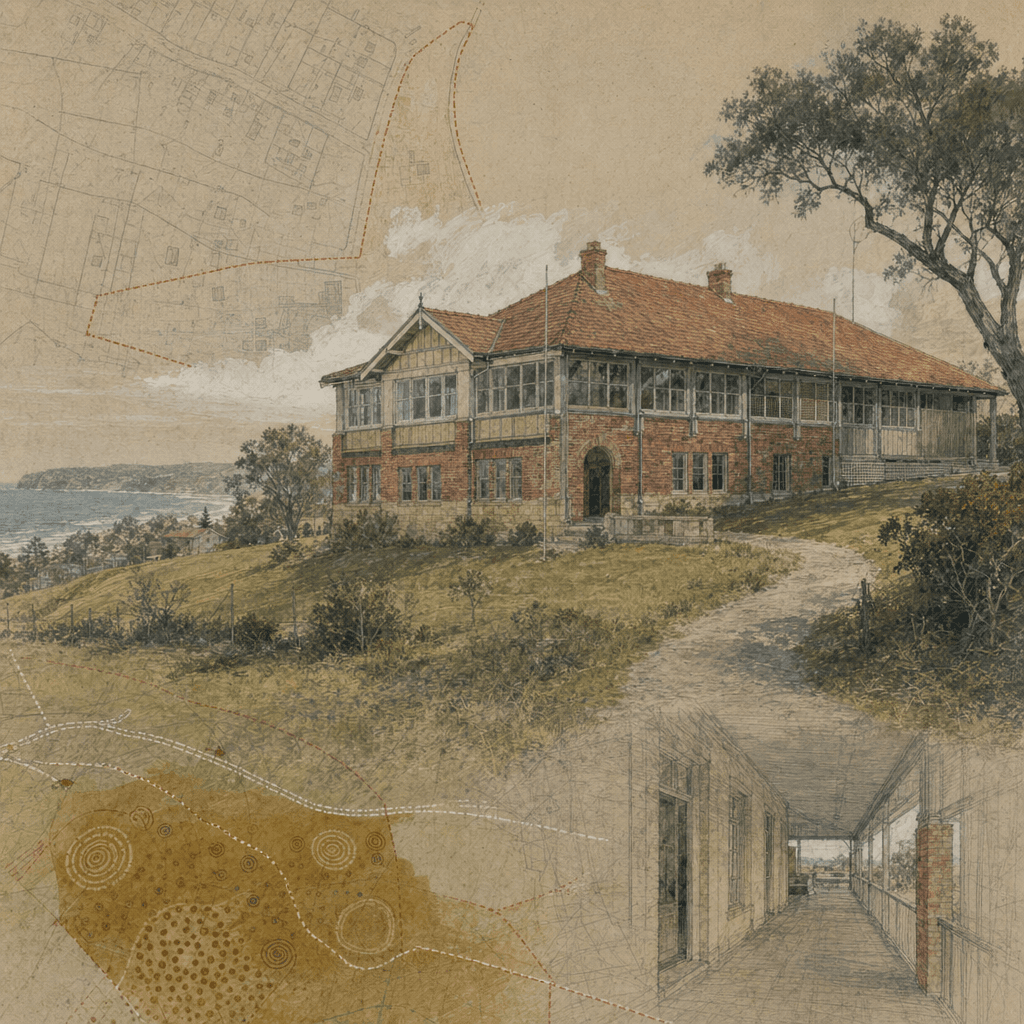
There is another layer under all of this, older and still present. This ground is on Aboriginal Country, with deep cultural history across the Dee Why and Long Reef area that long predates factories, roads, and estate maps. Public wording about the exact Traditional Custodian label here is not fully consistent in every source, so it is better to be careful than overconfident. But the larger truth is clear. This industrial story did not begin on empty land, and it does not cancel the enduring presence of Aboriginal people whose connections to this place continue.
So the image to hold is not just of shirts or jackets leaving a production line. It is of light falling across machinists’ hands in a suburb still deciding what kind of place it was becoming, while the much longer history of Country remained beneath the concrete and beyond the factory walls.
Audio Narration
Tour Route
You are here
Experience This Story On Location
Download the History Cake app to experience this story with automatic audio narration as you visit the location.