Back to The Bay Beneath the Park
Stone Under the Grass
At the bay’s edge, a playing field rests on reclaimed ground reportedly filled with the foundations of Sydney’s old General Post Office, turning civic demolition into shoreline.
Sydney, New South Wales1865 to 1889Story 1 of 5
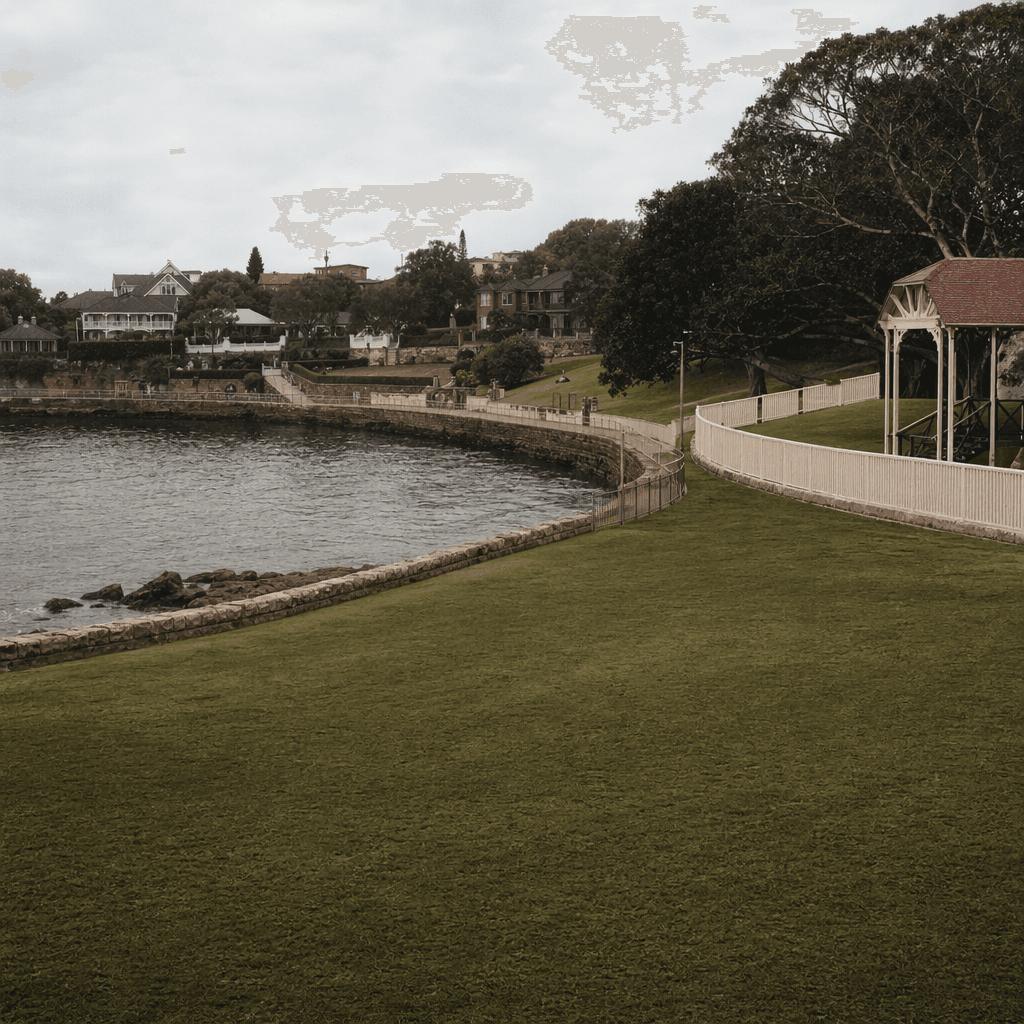
It suits this beautiful park and coastal walk that the surprise here is underfoot. The grass reads as open space, almost effortless. But this edge of Rushcutters Bay was remade.
The key detail comes from City of Sydney and heritage sources: the reclaimed ground that became Reg Bartley Oval was filled with material from the foundations of Sydney’s old General Post Office. That old post office was demolished in 1865. The strongest timeline in the record is that reclamation here was completed by 1883, and the oval was completed and fenced by 1889. What the sources do not fully spell out is just as interesting. They confirm the origin of the fill, but not the exact quantity, the route it took, or the engineering sequence that turned broken civic fabric into level sporting ground.
That gap in the record leaves room for the human link that is clearest in the evidence. James Barnet, the Colonial Architect associated with the new General Post Office, sits at the hinge of the story. In the city centre, one public building gave way to another. Here at the water, the afterlife of that demolition helped push the shoreline outward. A place shaped by tide and mud became a place marked by lines, fences, and organized play.
That is the quiet transformation to hold onto here. Not just reuse, but a transfer of purpose. Foundations built for letters, counters, and official business were broken up and sent away. Then, at the bay edge, they became hidden mass beneath turf. A civic core shed part of itself, and this coastal margin absorbed it.
There is something almost tender in that material afterlife. Cities rarely start from clean ground. They rebuild by carrying pieces of one life into another. On this waterside walk, where the bay can feel all light and air, the land itself keeps a denser memory. Sport ended up resting on demolition. Leisure settled over old stone. The neatness of the oval depends on a messier act of remaking that happened elsewhere first.
And that means the scene in front of you is not only parkland. It is also a record of Sydney changing its mind about what a shoreline was for, and what the remains of a major public building could become. The bay was not simply bordered here. It was altered, packed out, and fixed into a new shape, with old foundations buried deep enough that most people would never guess.
Audio Narration
Tour Route
You are here
Experience This Story On Location
Download the History Cake app to experience this story with automatic audio narration as you visit the location.