Back to The Bay Beneath the Park
West’s Creek Under the Park
A coastal walk with a buried working creek beneath it.
Sydney, New South Wales14 January 1812Story 2 of 5

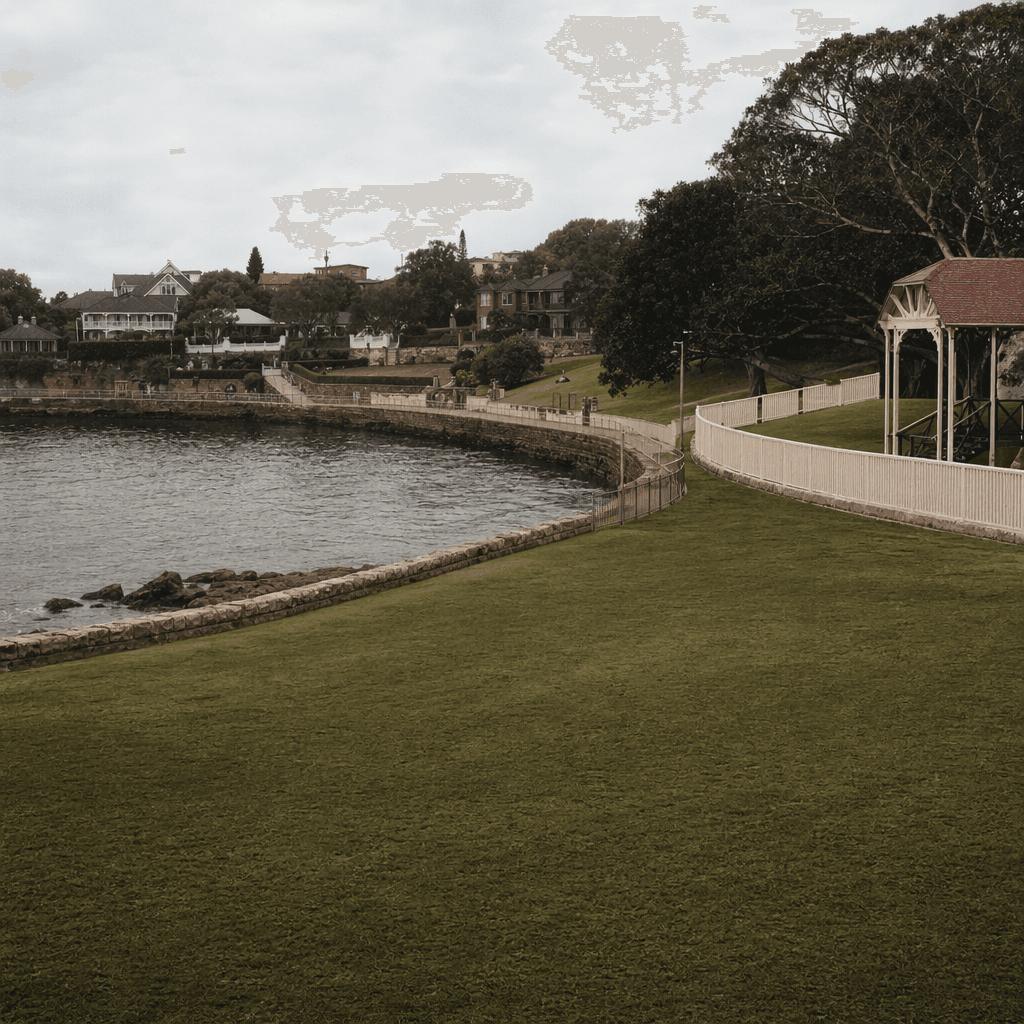
The beautiful park and coastal walk at Rushcutters Bay can hide a harder story. A fresh-water stream once ran beside this bay. It became known as West’s Creek, after Thomas West, the former convict who tried to turn that flow into a flour-milling business.
West had permission to build by 1810, and the mill was operating by the next phase of the story, with an opening linked to Macquarie on 14 January 1812. That matters because this was not a curiosity tucked into the scenery. It was a serious attempt to use the bay’s hinterland as working power. Water turned the wheel. The wheel turned the stones. Grain became flour.
Later accounts gave the scheme a large place in Sydney’s history, describing it as the city’s first successful watermill. The striking part is where it happened. Not on some distant inland stream, but here, beside a bay now read mostly as open grass, path, and water.
The catch was the creek itself. West needed steady flow, and the water seems not to have been enough. The mill appears to have closed before 1832. After that, drainage and reclamation kept remaking the shoreline and burying the evidence, until much of what had made the mill possible became difficult to trace on the surface.
That is what used to happen in this bay. Not just leisure, not just views, but work drawn from fresh water running downhill. Along this coastal walk, the lost machinery is gone, yet the idea of the place sharpens once you picture the missing creek: a narrow source of power under a landscape that now reads as pure park.
Audio Narration
Tour Route
You are here

Experience This Story On Location
Download the History Cake app to experience this story with automatic audio narration as you visit the location.