Back to The Bay Beneath the Park
Where the Bay Drilled
A peaceful marina-side walk overlays reclaimed foreshore once used by the New South Wales Voluntary Naval Brigade, where naval volunteers mustered and trained at the turn from colonial defence to Federation.
Sydney, New South Wales1880–1907, especially 1901–1904Story 3 of 5
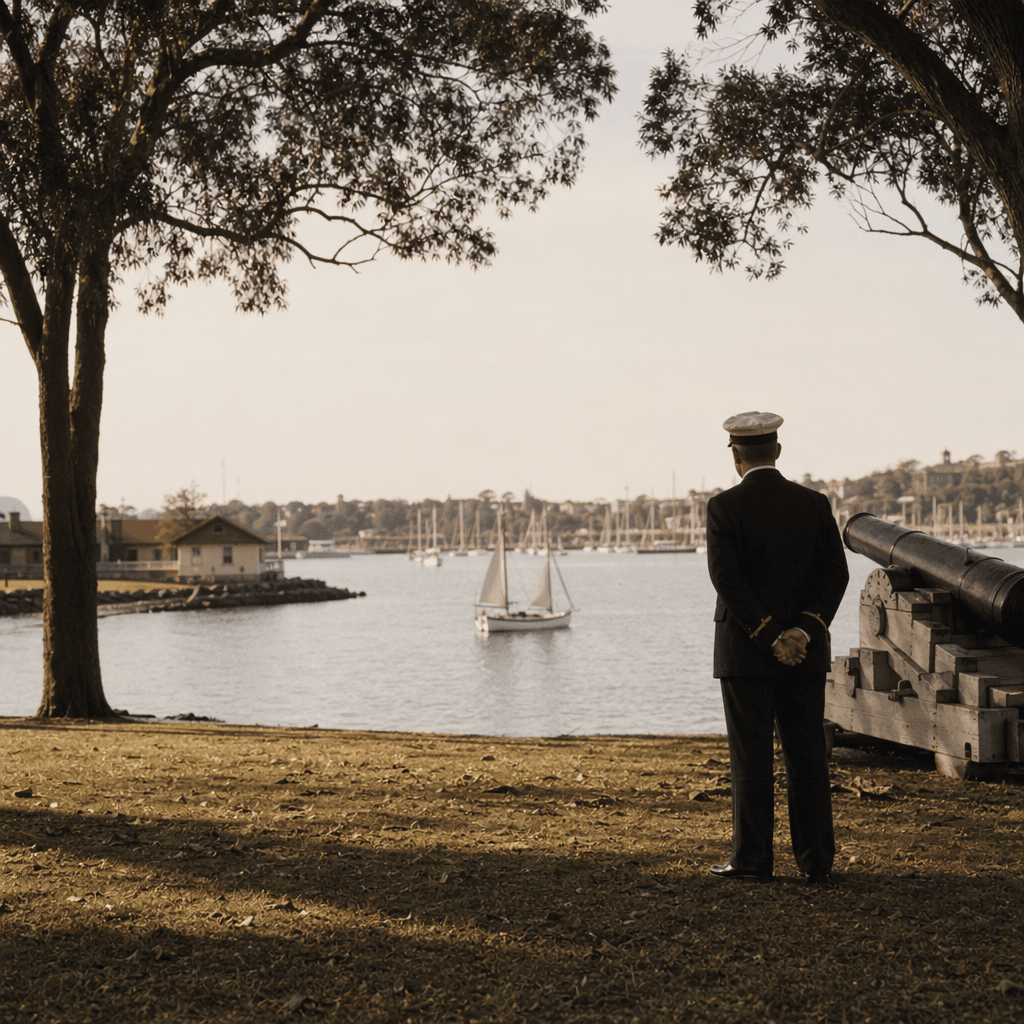
The calmness here can hide what this foreshore became. In the late nineteenth century, and into the early Federation years, reclaimed ground beside the bay was used by the New South Wales Voluntary Naval Brigade. The strongest evidence points to the southern edge of today’s Yarranabbe and Sir David Martin Reserve, rather than every stretch of the park. But the association is real: this was part of a working defence landscape, not just a shoreline for strolling.
That changes the picture of the bay. The water is still the same curve, but the land at its edge had been remade and then assigned a harder purpose. Drill culture leaves a different kind of footprint from a mill or a swamp. It is measured in musters, parade routines, equipment sheds, and men learning to act together on command. Around nineteen-oh-one to nineteen-oh-two, the site became more formal as a depot and drill ground. What feels open now was, for a time, organised around discipline and readiness.
One figure who helps bring that into focus is Captain Francis Hixson. He belongs to that transition point between colonial volunteer defence and the new Commonwealth order that followed Federation. He was associated with the brigade at Rushcutters Bay and with the contingent connected to the Boxer campaign in China. The striking detail is not just military administration. It is the image of naval volunteers gathering here by this water, in connection with departure for a conflict on the other side of the world. Whether they embarked directly from the bay is unclear. What is clear is that this peaceful foreshore was tied to that moment of imperial movement and anxious preparation.
And even then, not everyone accepted that the waterfront should stay in military hands. By nineteen-oh-four, there was protest about reserve land being alienated for naval purposes. That objection feels very modern. Who gets the edge of the harbour: the public, or the state? A path, a reserve, a drill ground, a depot. The argument sits right inside the landscape.
So when you look across the marina and the trimmed grass, it helps to hold both versions of this place at once. Not just the leisure ground, and not just the defence site, but the uneasy overlap between them, at a bay still deciding what its shoreline was for.
Audio Narration
Tour Route
You are here
Experience This Story On Location
Download the History Cake app to experience this story with automatic audio narration as you visit the location.