Back to Canals, Records, and Tidal Ground
When Quiet Became a Public Record
A walk through Mermaid Waters history, from canal-estate identity to a modern fight over noise on Hooker Boulevard.
Gold Coast, Queensland2025-10-22Story 3 of 5
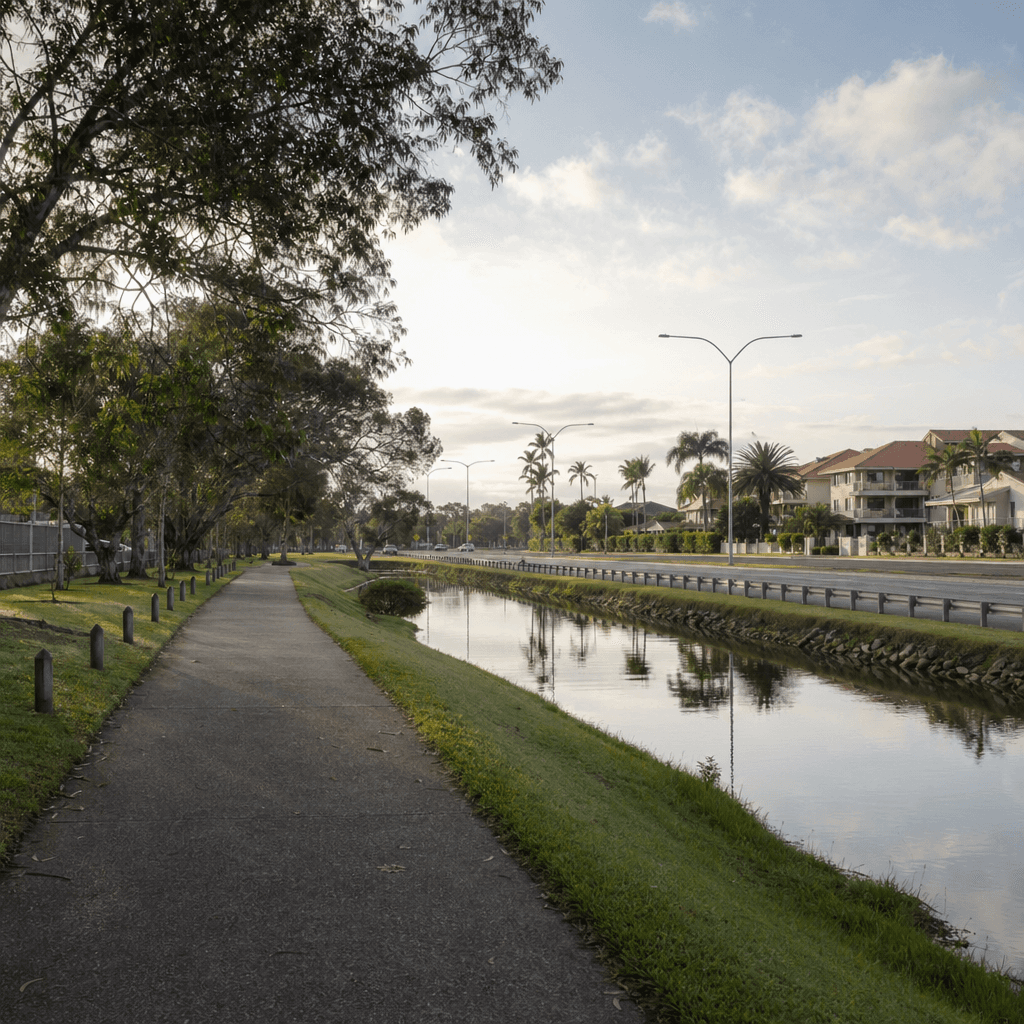
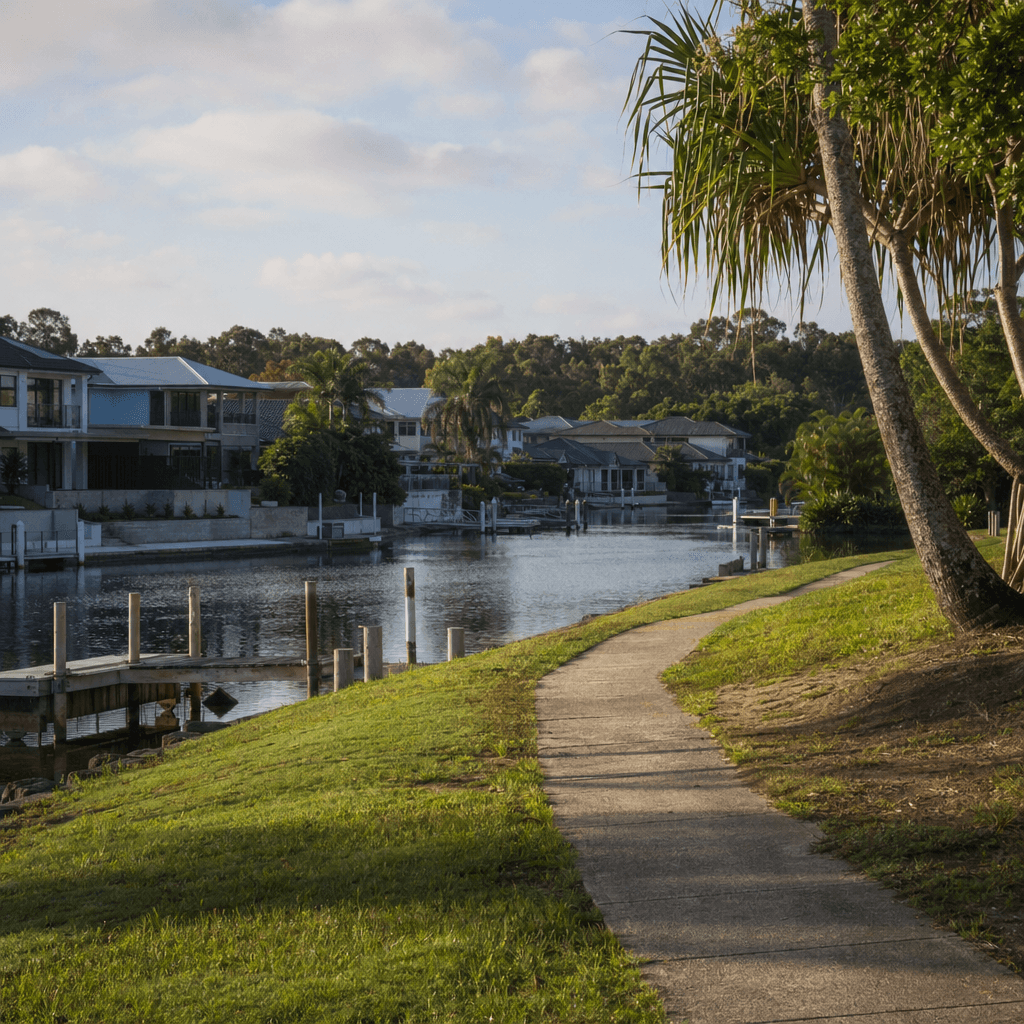
As you walk through Mermaid Waters, it helps to remember that this suburb was not only built in water and roads, but in ideas about lifestyle and control. One revealing clue sits in an older local detail: the Canal Estates Library branch. The name matters. It tied this part of the Gold Coast to the era when canal living was not just geography but a planning and marketing identity, a whole suburban vision shaped around managed waterways, access, outlook, and domestic calm. That makes this area’s history feel less abstract. Mermaid Waters was part of a district being presented not simply as settled land, but as a particular kind of engineered residential promise.
That promise gives extra force to what happened along Hooker Boulevard. In twenty twenty-five, a petition went to the Queensland Parliament asking for noise barriers on both sides of the road between Rio Vista Boulevard and the Dunlops Canal bridge. The principal petitioner was Janiene Gawith, listed as a Hooker Boulevard resident. What pushed the issue into the formal record was not the arrival of a new highway. It was the removal of shrubs in twenty twenty-four. For residents, that planting had been part of the suburb’s everyday shielding. Once it was gone, the road felt closer, harsher, less contained.
This is where the history of Mermaid Waters becomes unusually intimate. In a canal suburb, amenity is part of the original bargain. Water views matter. Separation matters. A sense of buffer matters. Residents framed the loss of shrubs as the loss of protection. Transport and Main Roads answered in a different language. The department said noise barriers there are not currently funded, and added that vegetation rarely provides meaningful acoustic protection. Officially, the feeling of being screened is not the same as measurable sound reduction.
That gap between lived experience and technical assessment is the real story here. Mermaid Waters can look finished, as if the hard work of shaping the suburb happened decades ago and the rest is maintenance. But suburban history keeps moving at the scale of daily life. A row of shrubs comes out. Traffic seems louder. A resident turns that change into a parliamentary petition. Suddenly the old canal-estate promise of calm domestic space is being tested by the practical priorities of a major road corridor.
There is one small wrinkle in the official record. The parliamentary material appears to refer in one place to Hooker Boulevard in Mermaid Beach, while the petition title, the petitioner address, and the corridor description point to Mermaid Waters. It seems likely to be clerical rather than substantive, but it is a useful reminder that local history is not only shaped by big engineering works. It is also shaped by paperwork, naming, and the way a neighborhood gets fixed, or blurred, in public records.
The petition closed in early January twenty twenty-six. The department left open the possibility that barriers might be considered through wider corridor planning connected to twenty thirty-two. So the matter was not resolved. It was deferred. And that feels true to the broader history of Mermaid Waters and the surrounding area. This has long been a place where design promised ease, but residents still had to negotiate what ease really meant once roads, homes, and everyday life met each other at close range.
Audio Narration
Tour Route
You are here
Experience This Story On Location
Download the History Cake app to experience this story with automatic audio narration as you visit the location.