 Back to Saint Francis Dam Driving Tour by History Cake
Stop 8 of 20
Del Valle
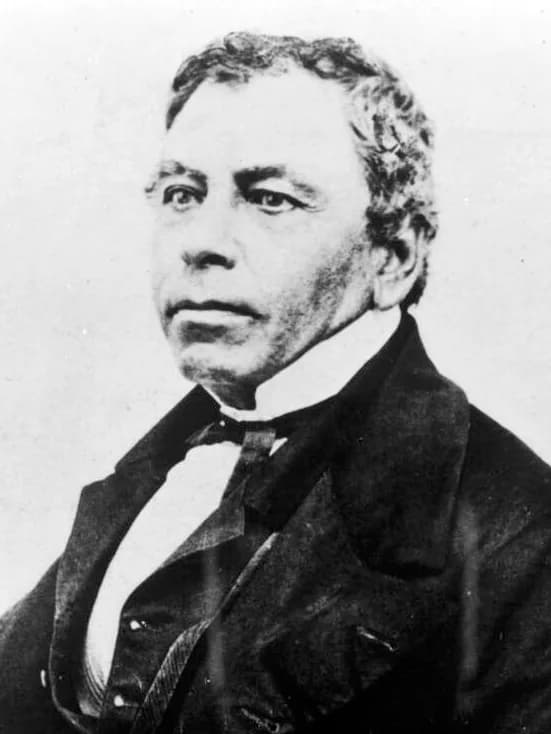
Ygnacio Del Valle was the Californio owner of the Camulos Rancho we are driving through
Valencia, CAWritten by historians, never AIResearched & written by Marc Striegel
In the app, this story plays on its own as you reach this spot. This page is the preview.
See the full tourListen
Narration
In the app, the full narration plays when you're on location.
The story
Del Valle
With water flowing down from lake Piru, the Camulos was one of the most productive ranchos in all of southern California. Ygnacio Ramón de Jesus del Valle was born in 1808 and lived through the gold rush, statehood and for three decades beyond, gaining him a perspective and place in history matched by few. Del Valle was a Californio ranchero and politician. He owned much of the Santa Clarita Valley at one time and served as both the Mayor of Los Angeles and state Assemblyman.
Del Valle's father, Antonio was a soldier in the Spanish army who came to California in 1819. He was chosen as mayordomo or overseer of the San Fernando Mission. Mexico was a couple of years from independence from Spain at this point.
Three years after Mexican independence from Spain, a 17 year old Ygnacio joined the Spanish army as a cadet in 1825 at the Presidio of Santa Barbara.
Between 1828 and 1832, he would work at the San Diego and then Monterey presidios. His father Antonio was still stationed in Monterey and in an unfortunate political struggle, the two ended up on opposite sides and never spoke again.
Ygnacio was in charge of the secularization of Mission Santa Cruz and Mission San Francisco de Asís, a powerful position of trust and was left in charge of the Presidio in governorJosé Figueroa's absence.
His father Antonio died in 1841 without leaving a will. On his deathbed, he decided he wanted to reconcile with his son and, in a letter, offered Ygnacio several properties, including the 48,612-acre (197 km2) Rancho San Francisco land grant he had received. He died before the letter was delivered to Ygnacio, but the son returned to the family homestead to administer the ranch anyway.
Without a will specifying how the estate was to be divided, Jacoba Feliz, Antonio's second wife who remarried after his death, filed a lawsuit to claim part of the massive estate, the San Francisquito part of which was the site the first recorded discovery of gold in California in Placerita Canyon. Eventually, the lawsuit was decided and the land was split and Ygnacio received the 13,599-acre Camulos Rancho, upon which Helen Hunt based much of her novel Ramona. This is the land you are driving through right now.
Del Valle married Maria de Los Angeles Carrillo in 1842. and for his service to the Mexican Army, del Valle received the Rancho El Tejon land grant in 1843.
In 1852, at the age of 44, he married 15-year-old Ysabel Varela. Del Valle remained on the City Council for five years, after which he devoted his time to improving Rancho Camulos. The del Valle family, including five children, finally moved to the rancho in 1861. Ysabel del Valle was known to help poor and orphaned children and when then moved (to Rancho Camulos) she brought eight orphans to live with her family.
Now del Valle did not live on this land initially, instead residing in the pueblo of Los Angeles, where he was active in local politics. In the 1840s, he served on the junta or city council, and was also treasurer of civil government under Governor Pío Pico.
In 1850, he was elected and was destined to be the last alcalde or mayor of Los Angeles before California Statehood. During his brief tenure he established the Los Angeles Rangers, an early law enforcement group. After California achieved statehood later that year, del Valle served in the California State Assembly.
He was elected to a one-year term in the Los Angeles Common Council in 1852. and was elected again in May 1856 but resigned in December of that year.
However, the late 1850s and early 1860s were difficult for ranchers in Southern California. Severe flooding had caused great damage to many ranchos. Despite this, the Del Valle family, like many Californios, continued to live beyond its means. Del Valle had to pay off the debts of his stepmother, Jacoba Feliz, in return for which received part of her land inheritance.
He had already sold off his Rancho Tejon to pay his own debts as well. The winter floods of 1861-62 were followed by droughts which lasted for three years, which forced del Valle to sell off his remaining land. He was left with 1,500 acres (6 km2) of his Rancho Camulos. The ranch grew the first commercially grown oranges in Ventura County.
Through 1870, the del Valles had seven more children; five of the twelve lived to adulthood. One, Reginaldo, became the youngest-ever president of the California State Senate at age 28 and was instrumental in the preservation of Mission San Fernando, as well as the movement to have the el camino real lined with mission bells.
Ygnacio del Valle died in 1880 and was buried on his rancho. Ysabel took over the running of rancho until 1900, then moved back to Los Angeles. In 1905, the ailing woman "refused to die" until she could be reunited with her long-dead husband. His remains were exhumed and moved to Los Angeles. Soon after their arrival, Ysabel died, and she was buried in the same coffin as Ygnacio.[7] They are buried at Calvary Cemetery.
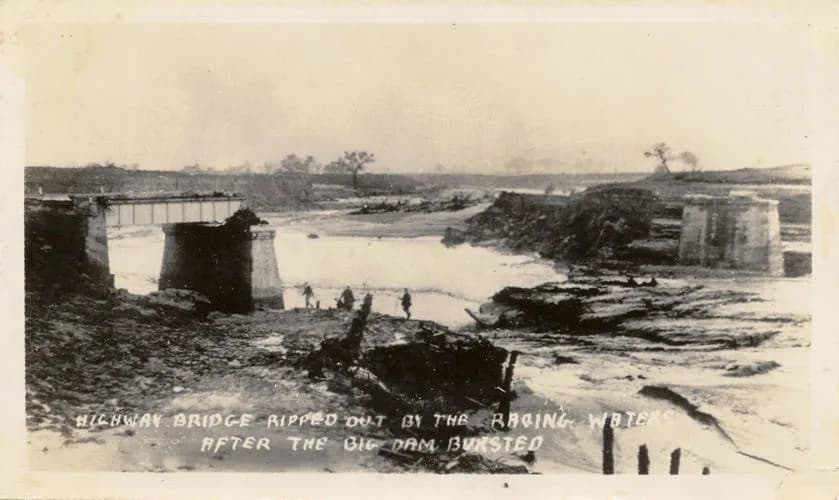
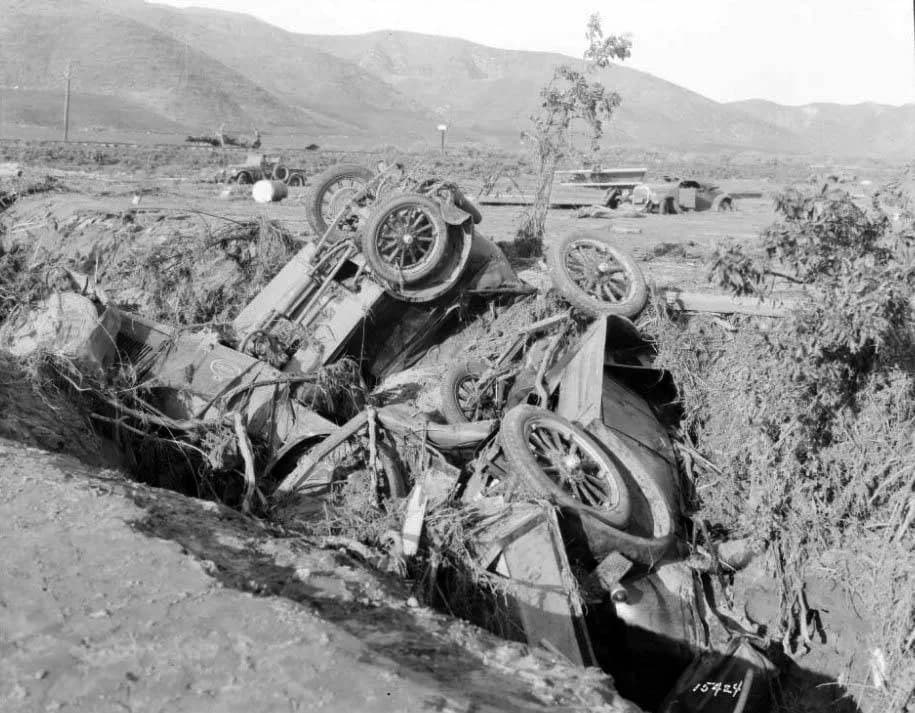
Because the Camulos ranch buildings and adobe sat on a plateau above the valley, they were just spared from the floodwaters to the south of them. They lost the southern end of all of their orange orchards but their lives and structures were saved from harm.
Gallery
From this place
On the route
Where it sits
In the app, this stop triggers as you arrive.
You are here
Out now
Hear it where it happened.
Get the free app, stand where this happened, and the story starts on its own.